- AI engineers
- Cloud engineers
- Cybersecurity analysts
- Data scientists
- DevOps engineers
- Full‑Stack developers
- Machine learning engineers
- Software engineers
- Systems administrators
- Web developers
Computer Science
- Bachelor of Science
- Minor
Side Navigation
A Values‑Driven Path to Cutting‑Edge Computing
Saint Vincent’s computer science program provides a hands-on, ethically grounded education within a nurturing Catholic, Benedictine, liberal arts and science setting. It delivers both rigorous technical content and a supportive community environment—ideal for students seeking personal academic attention in preparation for careers in software design, information systems, or cybersecurity. The computer science program is based on internationally recognized curriculum standards developed by the Association of Computing Machinery (ACM). Computer science degrees continue to be one of the most valuable and influential paths a student can take. A computer science degree from Saint Vincent College provides graduates with everything they need to ensure the success of their future and the ability to help shape the world of the future for all.
Related Programs:
Many students in the computer science degree program pursue a double major in data science or mathematics or earn a minor in cybersecurity.
Undergraduate Programs
Program Highlights
Flexible Career Environment
A computer science degree allows graduates the freedom to decide what environment they want to chart a career in. Students can pursue employment in a wide array of sectors – from manufacturing to health care, from law to entertainment industries. Everyone needs the skills that computer science graduates possess.
Individualized Support
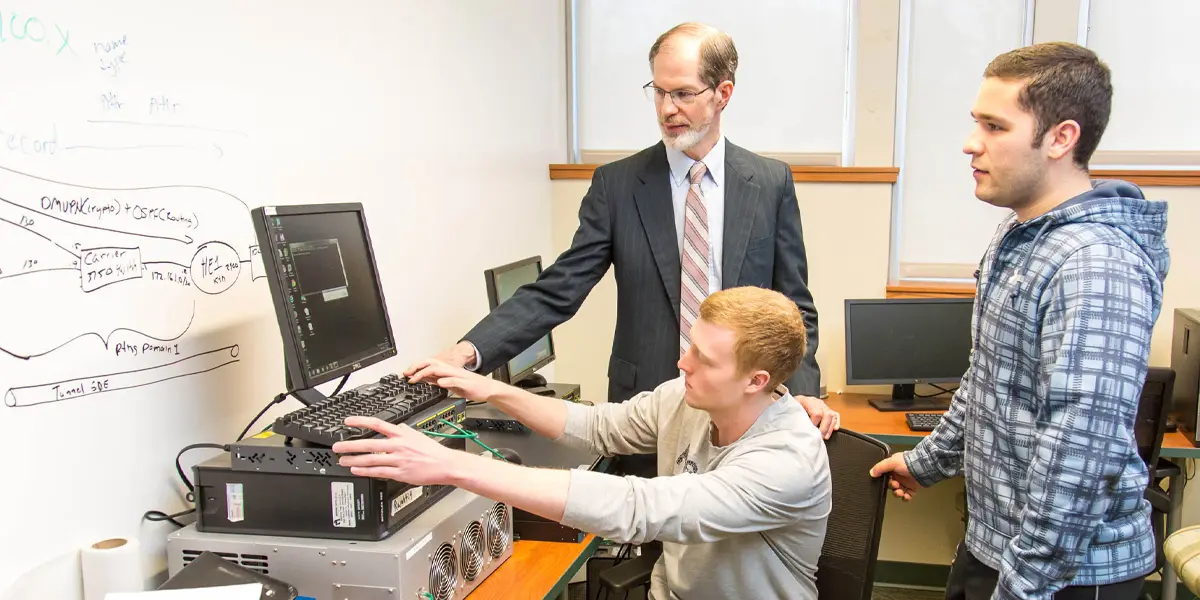
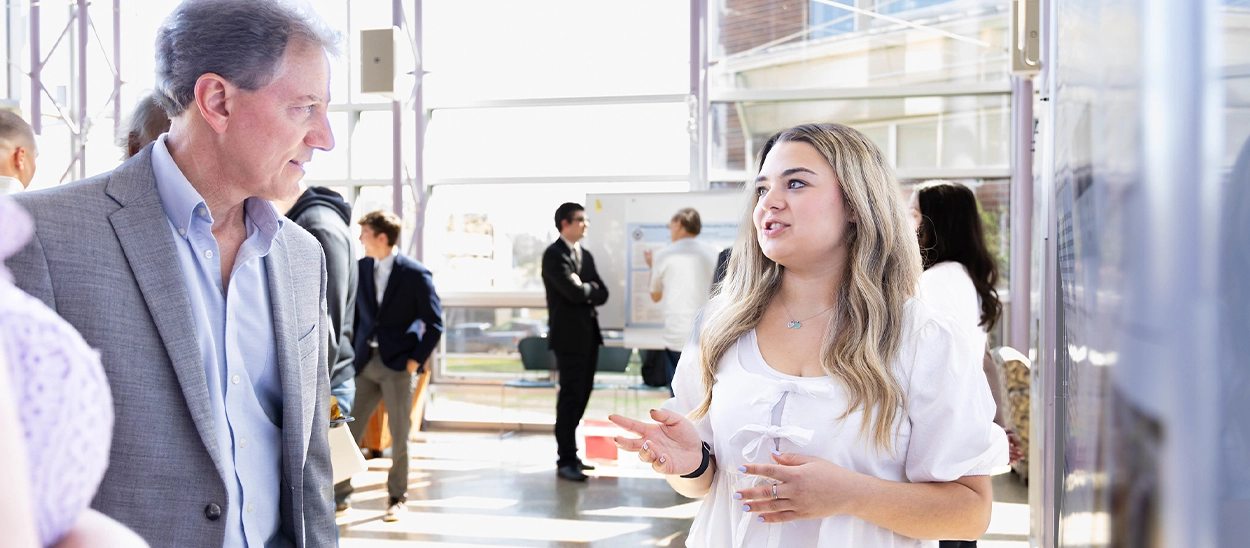
Faculty mentors work closely with students to help them identify their interests and strengths, guiding them through a comprehensive capstone senior project, internship, and research project that align with their goals.
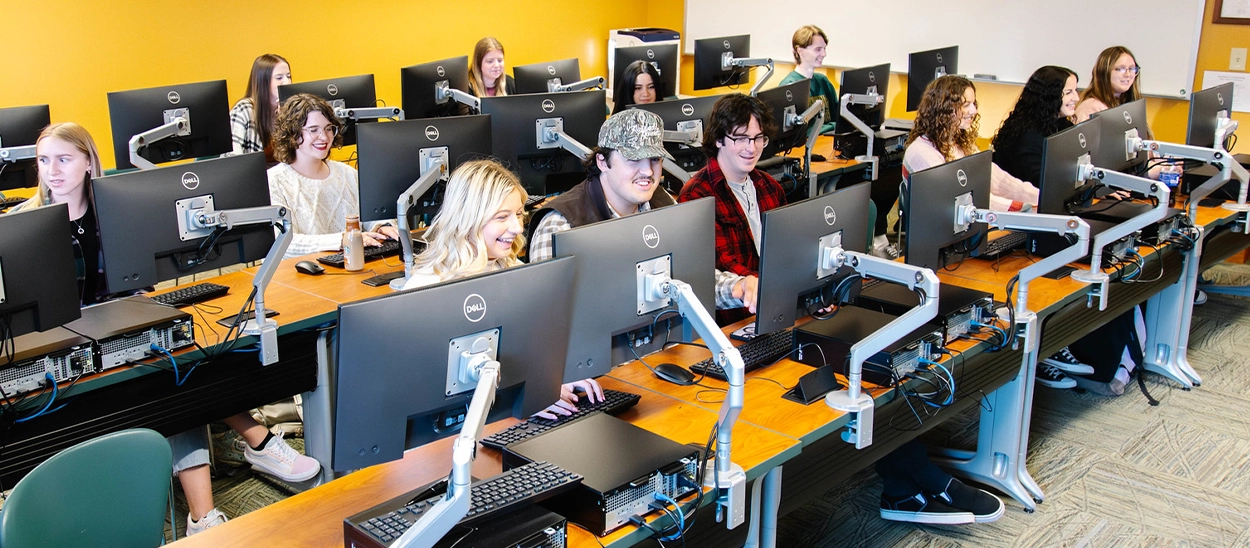
SVC Cybersecurity Club
Members of the SVC Cybersecurity Club are learning how to apply tools and concepts learned in class to compete in local, regional, and national competitions in the Cybersecurity circuit and have a chance to share cyber defense tips and procedures through public outreach events.
Careers After Saint Vincent
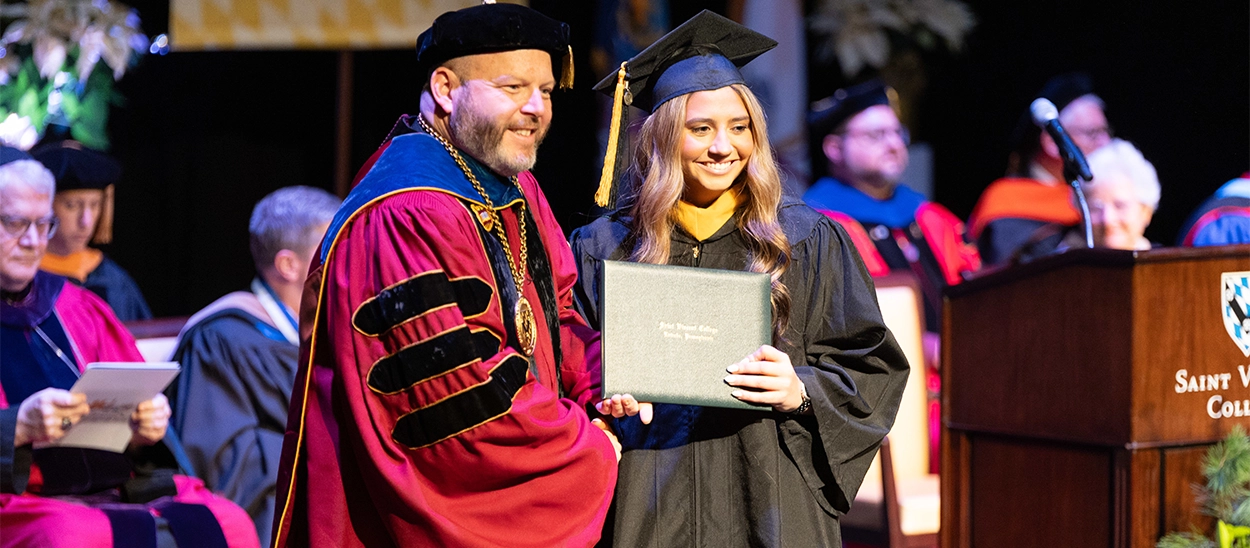
With personalized guidance from professors, hands-on research and internship opportunities, and a solid foundation in both theory and practice, students gain the confidence and preparation they need to pursue impactful careers or continue to graduate study.
Alumni will go on to successful careers as:
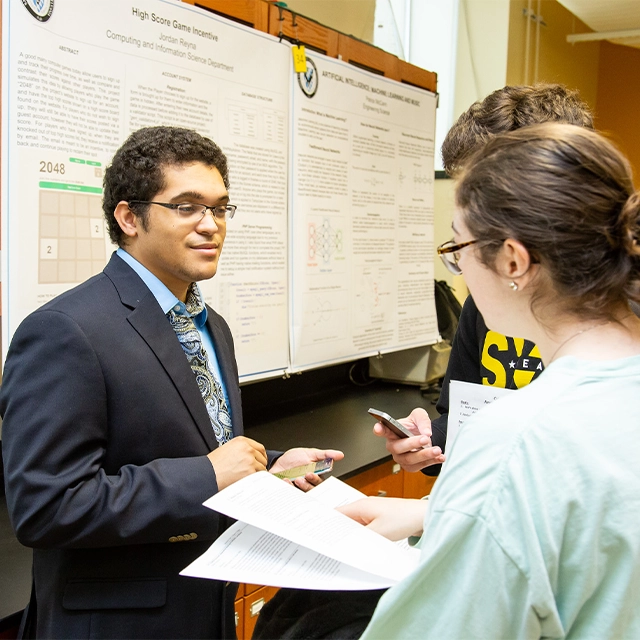
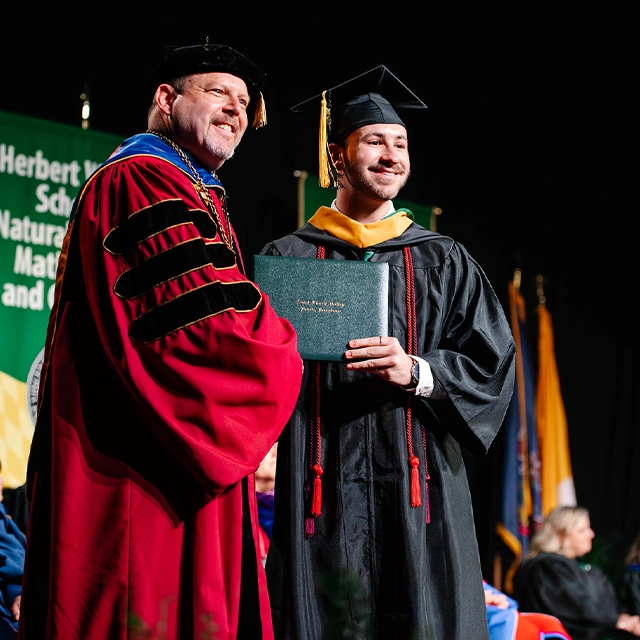
Graduates are employed across the nation across a vast spectrum of industries:
- Amazon
- Bechtel
- Federated Investors
- Gecko Robotics
- Hershey Entertainment
- Ingersol Rand
- Kennametal
- Microsoft
- NASA
- Nulton Aviation Flight Academy
- RedHat
- Space-X
- SteelBlue
Alumni have enrolled in prestigious graduate schools such as:
- Carnegie Mellon
- Indiana University (Bloomington)
- Maryville University of Saint Louis
- Mississippi State University
- Ohio State University
- Robert Morris University
- Southern Illinois University
- University of Pittsburgh
- Virginia Tech
Student Success Story
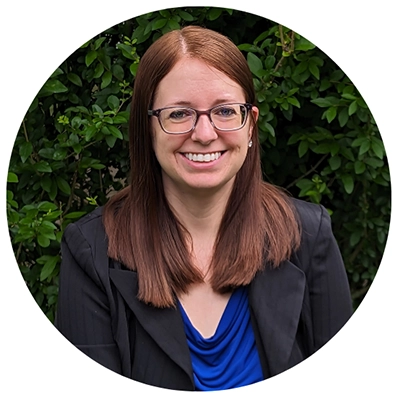
“My time at the CIS department gave me a diverse knowledge base in different disciplines while providing the flexibility to pursue my individual interests, both of which proved vital to my career. In my most recent role as a malware analyst, I needed a strong foundation in many facets of the field - assembly language, operating systems, programming, data structures, cryptography, cybersecurity - all of which I touched on in my time at Saint Vincent. The technical skills I developed at the CIS department combined with the Catholic liberal arts education I received at St. Vincent formed me as the well-rounded, faith-filled person I am today.”
Shauna Policicchio, C'13Former Malware Analyst, CrowdStrike,
Curriculum Requirements
The computer science major is part of The Herbert W. Boyer School of Natural Sciences, Mathematics and Computing and supported by our core curriculum, where students delve into diverse academic subjects at both foundational and advanced levels to explore how different disciplines connect, fostering deeper self-understanding and proficiency in their chosen field of study.
-
Required Courses - Major
CIS Core Courses:
- CS 102 Fundamentals of IT and Computing*
- CS 110 C++ Programming I
- CS 111 C++ Programming II
- CS 170 Discrete Structures
- CS 171 Introduction to Computability
- CS 221 Data Structures
- CS 225 Cybersecurity
- CS 292 Engineering and Computing Ethics
- CS 310 Programming Languages
- CS 312 Introduction to Algorithms
- CS 321 Data Communication and Computer Networks
- CS 330 Operating Systems
- CS 335 Computer Organization
- CS 350 Database Concepts and Information Structures
- CS 355 Software Engineering
- CS 357 Computing Science Project I
- CS 358 Computing Science Project II
CIS Electives (9 credits)
- Choose 3 from the following: CS 205 CS 226 CS 214, CS 250, CS 255, CS 270, CS 305, CS 315, CS 322, CS 325, CS 326 CS 365, CS 366, CS 367, CS 375
CIS Mathematics Requirement (14 credits)
- MA 111, 112 Analytical Calculus I and II, or MA 109, 110 Calculus with Applications I and II
- MA 241 Statistics I, or MA 311 Probability and Statistics I
- MA 251 Linear Algebra
Science Requirements (8 credits)
- Any of the following lecture and lab totaling 8 credits: CH 101,CH 103, CH 102, CH 104, PH 111, PH 113, PH 112, PH 114, BL 150, BL 151, BL 152, BL 153
-
Required Courses - Minor
Computer Science Minor (18 Credits):
- CS 102 Fundamentals of IT and Computing
- CS 110 C++ Programming I
- CS 111 C++ Programming II
- CS 221 Data Structures
- Six additional credits in CIS courses from the following list are required: CS 170, CS 171, any 200 or higher. At least one must be 300 or higher.
-
Key Courses
A Saint Vincent computer science degree starts with a strong foundation. First-year students take at least four core courses, including C++ Programming I and II, which establish software development best practices and prepare them for advanced work. They also take Information Systems to explore complex, integrated solutions, and Intro to Cybersecurity to highlight the importance of secure practices across all areas of computer science from the beginning.
Data Structures: This course explores how we organize and manage data efficiently using common data structures and the algorithms that work with them. You will learn how these structures are built using object‑oriented programming and compare different ways to implement them. Key topics include stacks, queues, tables, recursion, linked lists, binary search trees, sorting and searching methods, hash tables, graphs and graph traversal, heaps, and B‑trees.
Software Engineering: This course introduces methods for software design and implementation, along with support tools such as code repositories and project‑management platforms (e.g., Jira). You will develop skills in project management, teamwork, and written and oral communication. You will work in teams to design, build, and deploy a complete software system.
Introduction to Artificial Intelligence: This course provides an overview of the foundations of artificial intelligence, including predicate calculus, search techniques, knowledge representation, and knowledge‑based problem solving. You will complete assignments and hands‑on projects using the AI languages and techniques introduced throughout the course.
Learning Outcomes
- Analyze a complex computing problem and apply principles of computing and other relevant disciplines to identify solutions.
- Design, implement, and evaluate a computing-based solution to meet a given set of computing requirements in the context of the program’s discipline.
- Communicate effectively in a variety of professional contexts.
- Recognize professional responsibilities and make informed judgments in computing practice based on legal and ethical principles guided by the Benedictine Tradition.
- Function effectively as a member or leader of a team engage in activities appropriate to the program’s discipline.
- Apply computer science theory and software development fundamentals to produce computing-based solutions.
Our Faculty
Associate Professor
Computing & Information Systems
724-805-2416 | Dupré Science Pavilion W217
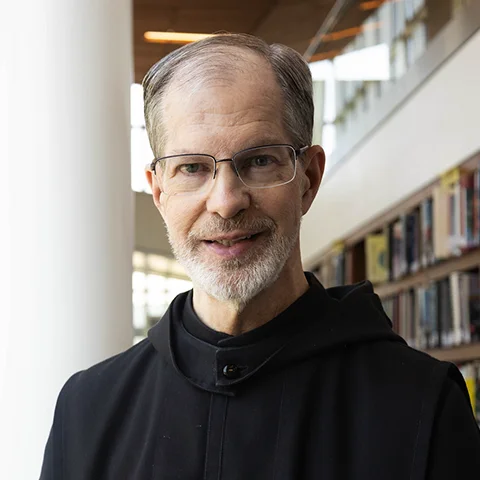
Dean, The Herbert W. Boyer School of Natural Sciences, Mathematics and Computing
Computing & Information Systems
724-805-2631 | Dupré Science Pavilion S104

Assistant Professor
Computing & Information Systems
724-805-2359 | Dupré Science Pavilion W219

Associate Professor | Department Chair
Computing & Information Systems
724-805-2421 | Dupré Science Pavilion W215