Alumni will go on to successful careers in:
- Business
- Counseling
- Education
- Forensics
- Marketing
- Policy analysis
- Social work
- Urban and community planning
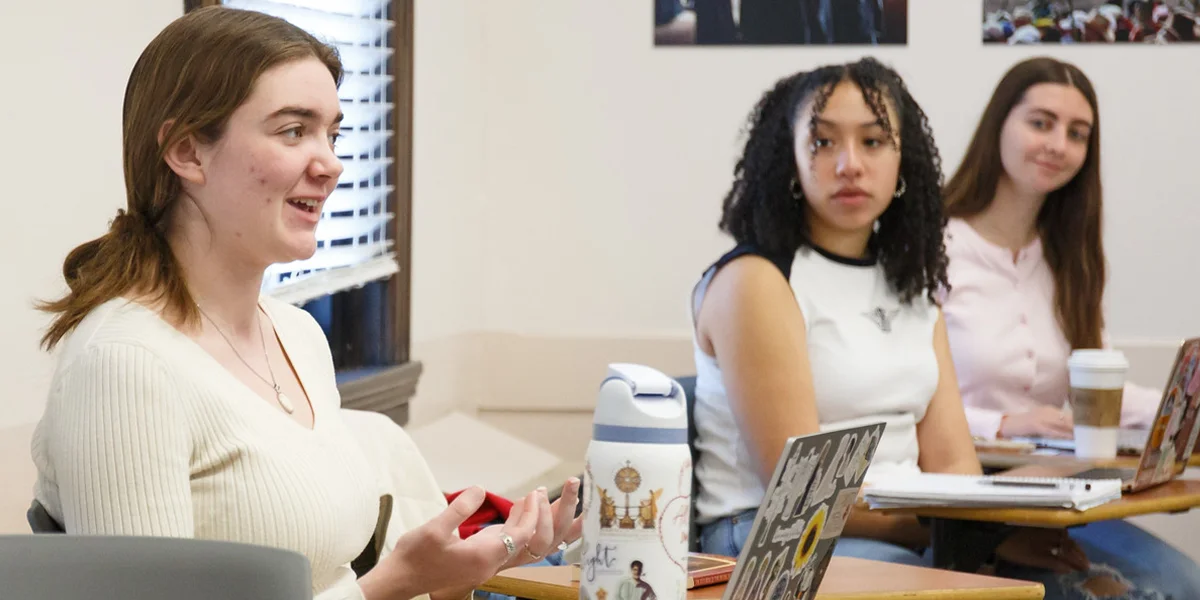
The sociology program develops a student’s scientific understanding of the social forces that shape human behavior. Sociology majors develop skills in critical thinking, problem solving, and conducting research. The focus of the program is on both understanding the social world and using sociological knowledge to help improve the human condition. Sociology majors learn how to think about the world by using concepts, theories, and models. An undergraduate degree in sociology provides a strong liberal arts foundation for positions in social services, law, criminal justice, education, marketing, business, government, and public relations—fields that involve investigative and critical thinking skills and working with diverse groups. In addition, this degree offers excellent training for graduate work in sociology, social work, law, counseling, criminology, and related disciplines.

Students are encouraged to gain practical experience during internships at social service agencies that support people who are struggling with family conflict, emotional distress, drug/alcohol addiction, or different kinds of behavioral dysfunction. This experience can help build a bridge to a future career.
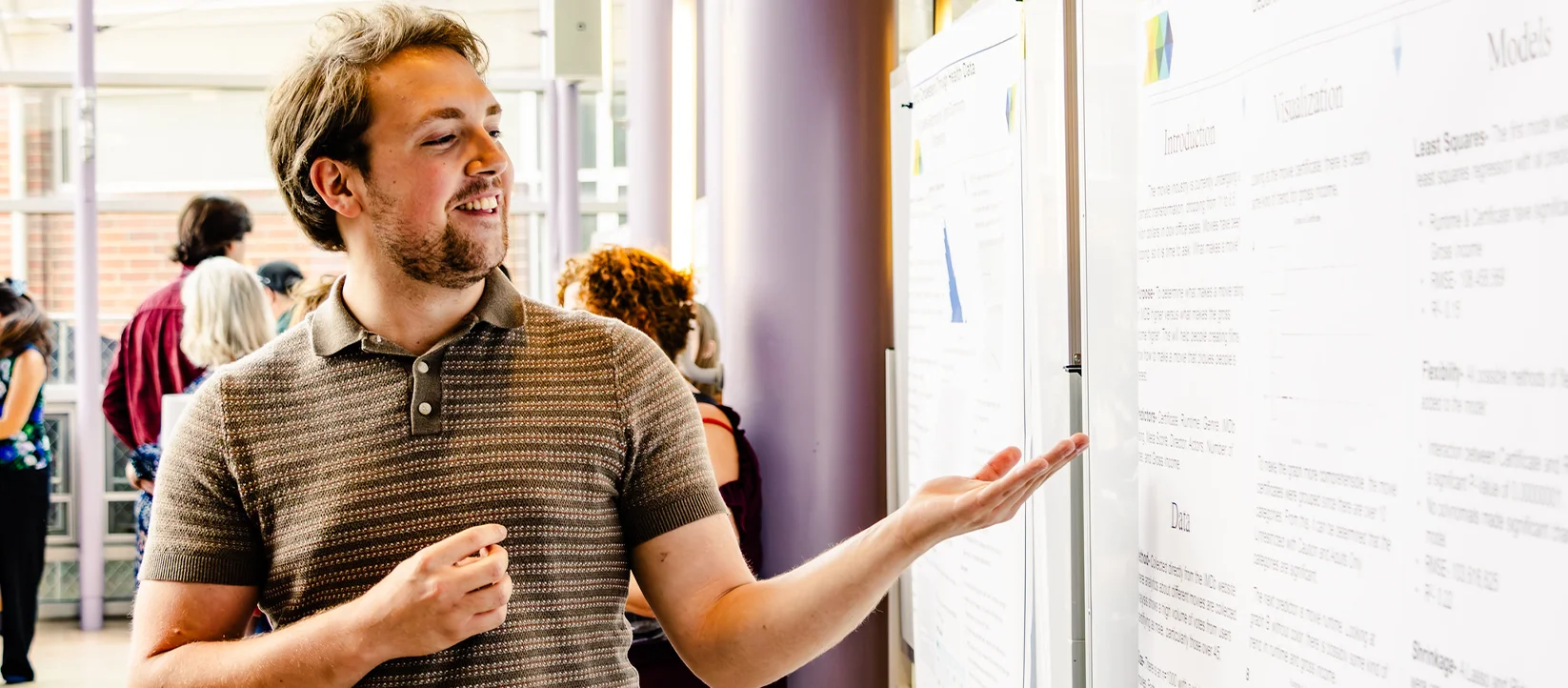
Sociology majors complete an independent research project during the fall semester of their senior year. Students select a topic of study, conduct research using quantitative or qualitative data to test hypotheses, receive guided mentorship from professors, and present projects at our Academic Conference. Recently, majors have explored attitudes about work among Gen Z, the social roots of suicide, Americans’ beliefs about the causes of poverty, and the attitudes of Taiwanese citizens about reunification with China.
The bachelor of arts in sociology prepares students for a wide range of career paths. Because the foundation of each course is research based, students will learn about and use different types of research methods across the curriculum. This approach ensures that every major can competently understand and explore the world in a scientific way. These invaluable skills can be applied in diverse occupational settings and serve as preparation for graduate study in social work, counseling, law, forensics, and sociology.
Alumni will go on to successful careers in:
Our students have secured jobs at a variety of companies in their field:
Graduate Schools our students have attended:
The sociology major is part of the School for Arts, Humanities, and Social Sciences and supported by our core curriculum, where students delve into diverse academic subjects at both foundational and advanced levels to explore how different disciplines connect, fostering deeper self-understanding and proficiency in their chosen field of study.
The philosophical foundation of the sociology program embraces Saint Vincent College’s emphasis on a holistic liberal arts education. The department’s unique perspective is helpful to any major or career path that would benefit from an understanding of human behavior. The program is committed to developing a student’s scientific understanding of the cultural and social forces that shape the way humans think and act.
The Bachelor of Arts Degree in Sociology requires 36 total credits. The following courses are required (each course is worth 3 credits):
The major must also take four sociology electives in addition to the eight courses listed above to complete the degree requirements.
Inequality and Social Problems
This course is an introduction to the study of social inequality. We will explore important sociological theories and research findings that show how economic, racial, gender, and political inequalities are important sources of most social problems in the United States.
Stress, Health, and Illness
This course explores the role of stress in the onset and progression of physical and mental illness. The main goal of the course is to show how social conditions like poverty, economic inequality, discrimination, and environmental pollution can produce harmful levels of stress and illness. The course will also consider the role of public policy as a strategy for reducing stress, improving health, and alleviating suffering.
Sociology of Crime
This course begins with an overview of the sociological theories of crime. The rest of the course applies these theoretical perspectives to the study of serious crimes such as homicide, sexual assault, robbery, burglary, and family and partner violence and their impact on society. Crime data and research studies are used to test the validity of the theories.
Foundations of Sustainability
This course, designed as an introductory course on environmental sociology, examines the varied forces and perspectives that have an impact on environmental policy making. Subject areas include environmental policy-making, the concepts of ecology and sustainability, renewable and nonrenewable resources, pollution, energy policy, and global environmental degradation.
Students will be able to: