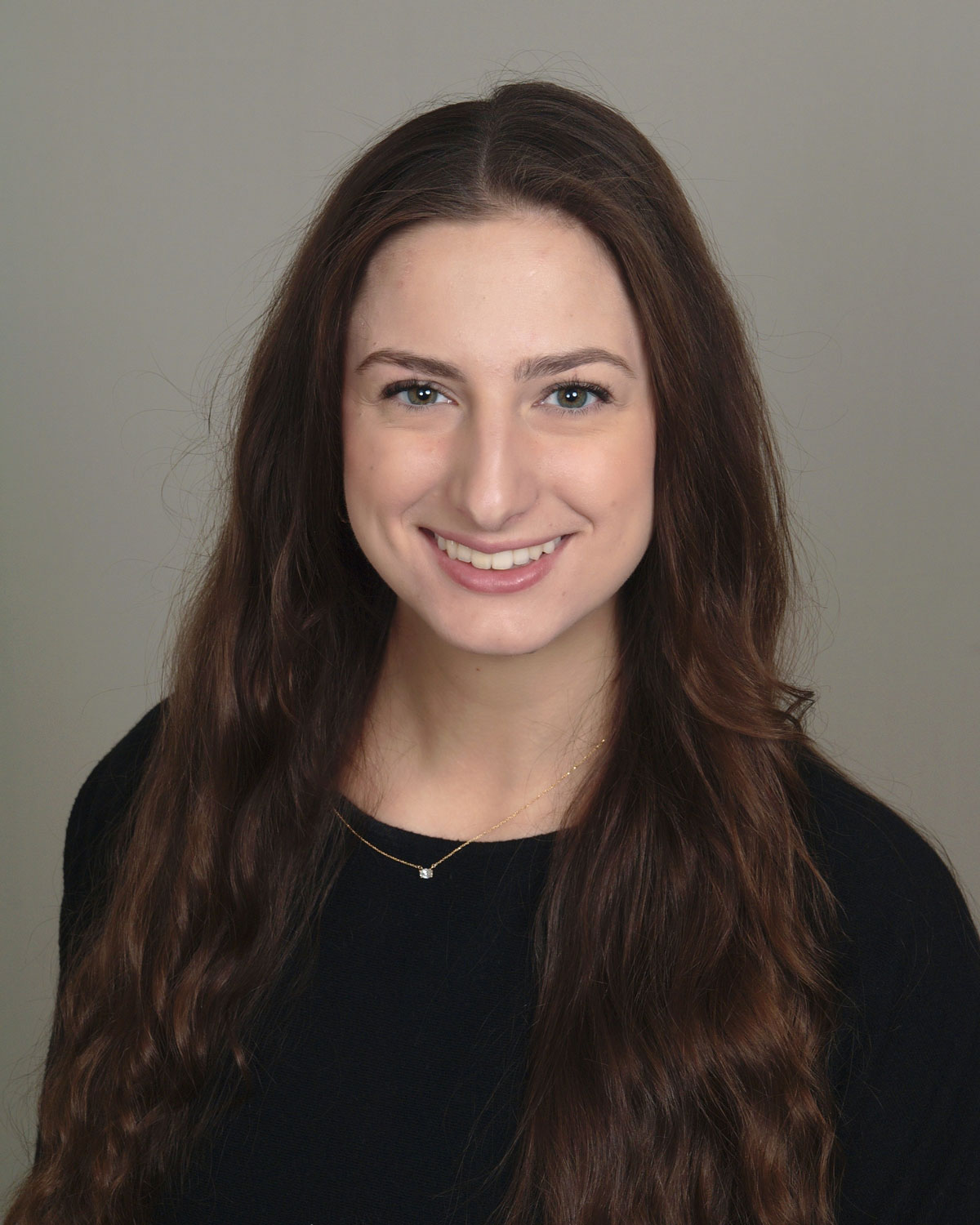
LATROBE, PA – Ava Dorazio, C’23, a laboratory manager in the Division of Infectious Diseases at the University of Pittsburgh, was recently honored with the C.E. McClung Award, presented annually for the most outstanding paper published by an undergraduate regular member in BIOS, Beta Beta Beta’s quarterly journal of biology.
The paper, originally presented as Dorazio’s senior research thesis while enrolled at Saint Vincent College, investigated the effects of in ovo supplementation of probiotics on the development of chicks’ immune systems. The work appeared in the August 2025 (Vol. 95, No. 3) edition of BIOS with Br. Albert Gahr, O.S.B., C’95, S’12, an associate professor in the Herbert W. Boyer School of Natural Sciences, Mathematics and Computing at the College, as co-author. The paper is titled “In ovo supplementation of probiotics leads to increased production of HDPs.”
“I wanted to see if injecting the yolk with healthy bacteria would boost chicks’ immune response to other potential pathogenic threats,” Dorazio said. “After administering the probiotics early in development, I introduced a viral immune stimulant to mimic an encounter between the chick and a virus.”
To determine the effects of these treatments, the Bearcat alumna measured the gene expression of several immune-related genes from the chicks’ spleens to determine the level of activity of the immune system. In the poultry industry, antibiotics are commonly given to chicks to prevent the spread of infections, but this practice poses the danger of introducing antibacterial resistance mechanisms, Dorazio said, rendering current treatment methods useless.
“This can be detrimental to both the chickens and human handlers who are exposed to such infections,” she said. “The application of this study would be to reduce this practice. If injecting yolks with probiotics could enhance the chicks’ immune systems substantially, then it would negate the need for this widespread use of antibiotics.”
The senior research thesis process takes three semesters; the initial semester requires a literature review of relevant contemporary research articles related to the project, while the second is spent conducting the research. Students spend the last semester analyzing the data and composing the final draft for presentation of the conclusions of the study.
“It’s not an area that I normally would work in, looking into immunology and some of the effects, especially during embryotic development, and looking at how that's affecting the chickens themselves,” Br. Albert said. “It was an idea that [Dorazio] came to me with to potentially pursue, and I had to basically say, ‘Well, prove it to me that we can do this.’ And she did. She found the material for the background and that brought me up to date so that I could understand where we were going with this. I did have the expertise working with the chicken embryo, so being able to help her with that was great and seeing her sort of mature and come through that process.”
Br. Albert was equally impressed with Dorazio’s ability to recruit peers for some much-needed assistance collecting and processing samples. “She was always able to find somebody to come in and help her with that,” Br. Albert said. “Not only was she benefiting from my teaching her, but she also was able to teach other students some of the things that she was doing.”
While transitioning her thesis into a research paper for publication was not a requirement for her Bachelor of Science in organismal biology, Dorazio sought publishing options after graduation as she was pursuing an academic research career. “Publications are an indication of a person's ability not only to perform experiments, but to also communicate experimental results in a way that highlights the relevance of the study,” she said.
Extensive edits to her thesis for it to be acceptable as a research paper to a peer-reviewed journal required at least three to four months of back-and-forth editing with Br. Albert in addition to several on-campus visits. “My success would not have been possible without Br. Albert guiding me through the process of drafting an appropriate article,” Dorazio said.
Just getting the work published is a profound accomplishment, Br. Albert said, but earning an award for it is a testament to Dorazio’s hard work. “To be ranked as a good paper, it not only needs to have good content, which I knew we had as her research was sound, you need to be able to bring it together to make it readable. I put that mostly on Ava because she took the time to do that. It really says a lot, both about the quality of the science that’s in the paper, but also the quality of her writing in the paper itself. She was certainly highly motivated to make this project work.”
With a handful of family members working in the medical field, Dorazio always found science to be an interesting area of study. That interest became more focused as a high school senior when the Derry Township native read Thomas Hager’s “The Demon Under the Microscope.”
“Hager recounts how the first synthetic antibiotic was created, and through that story he illuminated for me the incredible ways known biological principles can be applied to solve modern medical mysteries,” Dorazio recalled. “I was so excited at the thought that I could be a part of the teams making these discoveries one day, so I decided to major in biology with the intent to go into research.”
Next, Dorazio needed a suitable undergraduate institution that met her needs: a smaller school that offered good opportunities for mentorship from faculty and meaningful resources for biology research. Those needs narrowed Dorazio’s options considerably, and after touring Saint Vincent, meeting faculty and see the laboratory facilities, she knew the College met her criteria.
Along the way, the 2019 Derry Area High School graduate learned a host of profound lessons that have thus far served her well in her career, including what to look for in good mentorship and leadership in research labs and life in general.
“Being able to recognize these characteristics has provided me with so many blessings in my career as I’ve been able to navigate away from toxic research environments and poor leadership toward more beneficial, fulfilling work,” she said.
Dorazio is quick to credit Br. Albert and Dr. Michael Rhodes, C’93, an associate professor of biological science, tagging them as incredible mentors during her time at Saint Vincent and beyond.
“As Br. Albert’s personal assistant (for two years), we worked on genetics research projects, specifically involving CRISPR/Cas9,” Dorazio said. Br. Albert’s kind and patient teaching style in the lab allowed Dorazio to enjoy the research environment and reinforced her decision to pursue a career in research.
Rhodes was Dorazio’s professor for Comparative Anatomy lecture and lab, but they also worked together closely during her time as president of Saint Vincent College’s American Medical Student Association (AMSA) chapter. “[Rhodes] was incredibly supportive as I pivoted from pre-med toward a career in research,” Dorazio said, “offering advice, guidance and reassurance for my career aspirations, which allowed me to fully explore all my options and choose the path that best suited my interests and skills.”
Rhodes remembers Dorazio well as a model student, touting her proven group leadership in a laboratory setting at the College. “I was so impressed with her abilities in the laboratory that I asked her to serve as my teaching assistant in one of the laboratory sections the next fall,” Rhodes recalled. Dorazio predictably excelled in the role, proving to be a caring teaching assistant who was concerned about the students and how well they were learning the coursework, Rhodes added.
As AMSA chapter president, Dorazio was responsible for organizing several well-attended events, including suture clinics, trivia nights and Medical College Admission Test study halls for all students preparing for entrance exams. The consistently high attendance was particularly impressive as it was not easy to engage student participation in events following the COVID-19 Pandemic, Rhodes said.
In addition to a bachelor’s degree in organismal biology, Dorazio earned minors in biological psychology and history.
“Ava is very independent, empathetic and inquisitive and also works very well with others with a collaborative spirit,” Rhodes said. “Those are all characteristics that you hope will develop in a developing scientist. Any laboratory or company would be lucky to have someone as capable as Ava working for them.”
In her current role with Pitt, lab researchers focus on characterizing the mechanisms of antibiotic resistance in bacterial infections and attempt to suggest alternative treatments for multi-drug-resistant infections. Dorazio manages project timelines, executes experiments, analyzes results and assists in coordinating nation-wide clinical studies to evaluate fluctuating antibiotic resistance rates.
Effective May 2026, Dorazio will begin work as a microbiologist for Alcon at its Fort Worth research lab in Texas. The work will generally focus on quality assurance and safety of products on the market, as well as research and discovery for new medications and patient products.