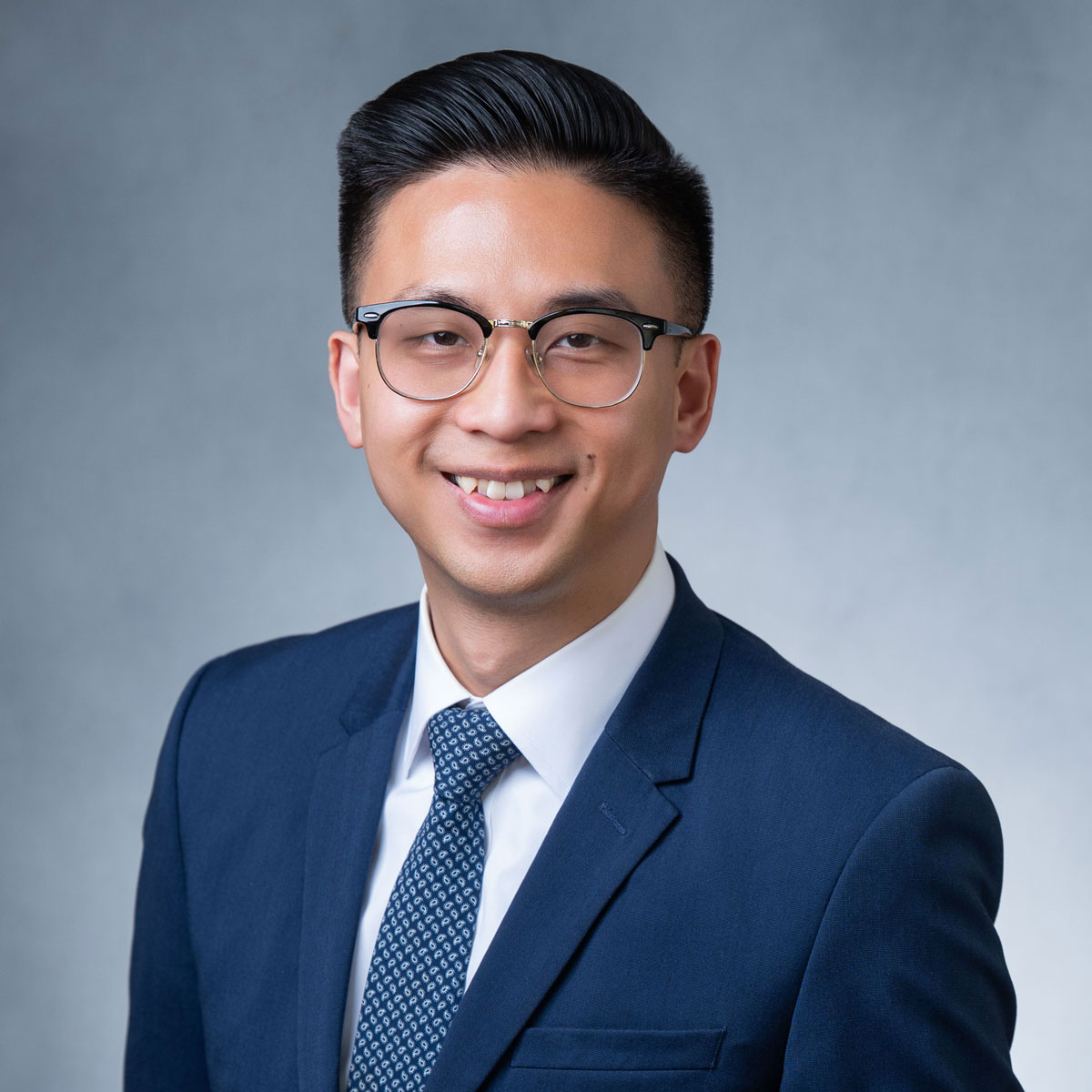
LATROBE, PA – With an unwavering commitment to academic distinction, Phil Tran, C’20, found a perfect fit at Saint Vincent College but took a scenic route to get to campus.
He was born in Vietnam but grew up in the Chester County suburbs west of Philadelphia. Tran served as student body president during his senior year at Bishop Shanahan High School in Downingtown. From there, he entered Saint Charles Borromeo Seminary to train to become a Catholic priest for the Archdiocese of Philadelphia.
For a decade prior to entering the Seminary, Tran was set on becoming an engineer and engaging with the world in a mechanical way aimed at problem solving. Seminary formation, however, opened Tran’s eyes to engaging with the world as a philosopher and theologian, which still entailed methodical and critical thinking, oftentimes to solve problems, albeit different kinds of problems.
“Between my interest in those fields and in ministry, it felt natural to pursue philosophy and theology,” Tran said. Though he left seminary formation, Tran continued to discern a call to religious life. He enrolled at Saint Vincent College in 2017 to study philosophy and theology and discern monastic life with Saint Vincent Archabbey.
“My very first semester, I recall reading Plato’s ‘Republic’ in three classes simultaneously and developing a deep desire to immerse myself in the great books,” Tran said. “The small classroom sizes consistently allowed for great seminar discussions and the ability to get to know my professors better and learn from them outside the classroom.”
After Tran’s first year of studies at the College, he engaged in a summer internship in 2018 with the National Catholic Bioethics Center (NCBC), a leading nonprofit organization for providing education, guidance and resources to the Church and society to uphold the dignity of the human person in healthcare and biomedical research. Tran conducted a research project examining standard policy for treatment of individuals with gender dysphoria and opinions regarding conscientious objection amongst American medical associations. He also received formation on the history of bioethics—a multifaceted field at the intersection of life sciences and ethics—and its application to healthcare policy and institutions, specific issues examined by the field and ethics consultation. The enlightening first year at Saint Vincent and experience gained during the NCBC internship inspired Tran to pursue bioethics study.
Along the way, the Bearcat graduate had the benefit of a wide range of professors at the College and especially enjoyed learning about ethics from Sr. Mary Veronica Sabelli, PhD, a former associate professor of philosophy, and Dr. Michael Krom, professor and Department of Philosophy chair. Tran also studied Thomism—the philosophical and theological tradition based on the thought of Saint Thomas Aquinas—during one of Krom’s classes. Tran credits the School of Arts, Humanities and Social Sciences professors and their classes as being foundational in his later studies and career.
Additionally, enrolling in Catholic Political Thought with Krom and politics courses with Dr. Jerome Foss, assistant vice president of academic affairs and Core Curriculum, were influential in Tran’s grasp of political philosophy and his formation as a Catholic American citizen. “There was deep intellectual and human formation in the extracurricular reading groups in which I partook and in the academic conferences I went to, all of which were memorable experiences with my peers, led by my professors,” Tran said. “I would have great, hours-long conversations with Dr. Krom during the drives to and from conferences at places like the University of Notre Dame.”
Since Tran was able to narrow his focus to bioethics early on, he had vast opportunities to draft papers that tied classroom concepts into bioethics. This reached its fullest expression in his senior philosophy thesis in which he authored a 52-page paper connecting his curricular learning in metaphysics, ethics and Thomism to other independently explored concepts such as personalism and bioethics.
“Phil’s senior thesis on bioethics was a great example of how the foundation in the history of philosophy that we provide in the philosophy major equips our students to tackle difficult contemporary issues,” Krom said.
Tran also fondly recalls writing a 30-page senior theology thesis revolving around spousal love, the ‘Song of Songs,’ Saint Bernard of Clairvaux and Saint John Paul II.
“The theology thesis was not just intellectually stimulating but also spiritually formative for my vocation to married life,” said Tran, who met his fiancée, Jessica Ackerman, C’20, at the College. They are planning a December 2026 wedding.
Tran graduated from Saint Vincent in December 2020 with undergraduate degrees in philosophy and theology. After a two-year stint at The Culture Project International—a nonprofit organization that trains young adult missionaries to promote human dignity, self-worth and living a virtuous life—Tran landed a position in August 2022 as program coordinator at the University of Notre Dame’s de Nicola Center for Ethics and Culture. Tran spent three years in the role while also undertaking graduate studies at the University of Mary. He earned a Master of Science in bioethics in April 2023 from the University of Mary.
While at Notre Dame, Tran simultaneously served as a personal consultations intern for NCBC for two and a half years before being offered a full-time position in August 2025 as manager of ethics operations and resources. “I oversee our free personal ethics consultation service, which allows anyone to connect with one of our bioethicists for free to help them make ethical healthcare decisions for themselves or a loved one, navigate medical training or the workplace as a Catholic clinician and conduct ethical biomedical research,” he said of his NCBC position. “I field ethics consultations in this capacity, along with auditing health insurance claims for ethics compliance for our clients who offer healthcare plans consistent with Catholic teaching.”
Tran also heads the NCBC’s membership programs, oversees its Fellows & Interns Program, directs information technology and ensures organizational integration and operational efficiency.
“As a student, Phil exemplified the Philosophy Department’s commitment to the examined life,” Krom said. “Whether we were in class discussing moral principles in Aristotle’s ‘Nicomachean Ethics,’ at a social thinking through Anselm’s arguments concerning free will and divine providence, or at the University of Notre Dame’s Fall Conference debating the merits of a keynote address, Phil’s contributions to our intellectual culture were invaluable.”
Tran also served as a prefect for seven years for the Faith and Reason Catholic College Summer Program, a weeklong initiative directed by Krom and designed for advanced high school and first-year college students who are seeking an opportunity to come to a richer, deeper understanding of the Catholic faith and its integration in college education.
“I believe Faith and Reason affords high school students the opportunity to see some of the best of Saint Vincent in that they get a substantial taste of a liberal arts education in the Catholic tradition, pray in the Benedictine tradition, immerse themselves in a rich community of peers, and experience the beauty of southwestern Pennsylvania’s nature and topography,” Tran said. “In a certain, real sense, serving as a Faith and Reason prefect has allowed me to share a sample of my own college experience with high school students who are discerning the next steps in their intellectual and human formation.”
While his career and personal commitments now prevent him from continuing to serve as a Faith and Reason prefect, Saint Vincent is never completely in the rearview mirror as Tran often reflects on the College community and its impact on his life. “I not only learned so much with my peers, but also so much from them, whether that was because their pursuit of the truth was contagious and invigorating or because I learned how to live my life better because of the examples and ideas they provided,” he said. “The professors who mentored me have been profoundly influential in my growth as a young man, and I also greatly benefited from the accompaniment of many of the Benedictine monks.”
While at Saint Vincent, Tran also learned that an authentic college education cannot be considered solely in terms of job training. In one undergraduate course, he discovered that the classical understanding of university formation entailed pursuing knowledge for its own sake and allowing that to form the student as a human person, not simply as a future addition to the workforce.
“In other words, authentic college formation is human formation in virtue,” Tran said. “In my experience as a Saint Vincent undergraduate, I was afforded many opportunities to live these ideals through my liberal arts education that continues to inform how I engage the world and society; through my professors who formed me in ways beyond academically; through a community of peers with whom I studied, lived and grew; and through the spiritual life of a Catholic, Benedictine college.”