LATROBE, PA – Saint Vincent College and the Westmoreland Historical Society were awarded a $15,000 Histories and Legacies of American Slavery grant for 2026 from the Council of Independent Colleges (CIC) to support the “Boundaries of Freedom: Mapping Unfree Labor” project.
Supported by the Mellon Foundation, the grant has enabled faculty, students and community partners to uncover and share the stories of enslaved individuals whose lives have long been overlooked in Westmoreland County history. The historical county contained land that is now part of modern-day Allegheny, Armstrong, Beaver, Greene, Fayette, Indiana and Washington counties, and its western border was contested with Virginia.
Part of the Pennsylvania Gradual Abolition Act, passed on March 1, 1780, required the registration of enslaved individuals in Pennsylvania. In Westmoreland County, the documentation lacks municipality data. Researchers worked to connect those registrations to modern municipalities.
The Act was partially inspired by the events of the American Revolution and describes how the language of freedom motivated Pennsylvania to institute gradual emancipation, although the Act did not immediately free any slaves and bound the children of slaves for 28 years.
Three core members of the project are Dr. Tracy McNelly, professor and chair of the Department of Education, housed within the College’s School of Arts, Humanities and Social Sciences; Dr. Emily Arledge, C’15, visiting assistant professor of history and director of the College’s Center for Northern Appalachian Studies; and Dr. Lauren Churilla, executive director of the Westmoreland Historical Society.
“One of the most rewarding aspects of this project has been working alongside our student researchers as they uncovered the often-overlooked history of slavery in our own region,” McNelly said. “Their dedication to this work has been inspiring, and I am excited to see the accompanying lesson plans placed into the hands of local history and social studies teachers. By equipping educators with research-based, classroom-ready resources, we hope to foster thoughtful, age-appropriate conversations about slavery, including the history of slavery in western Pennsylvania, and help students develop a deeper understanding of our shared past.”
The project features two public-facing components: collaborators seek to create a freely accessible website—utilizing the Omeka Classic web publishing platform—that contains a wide range of primary resources related to Westmoreland County’s slaveholding history into one digital collection. Building this collection is one of the project’s most time-consuming aspects, and student involvement, which began following the end of the spring 2026 semester, has been critical to its success.
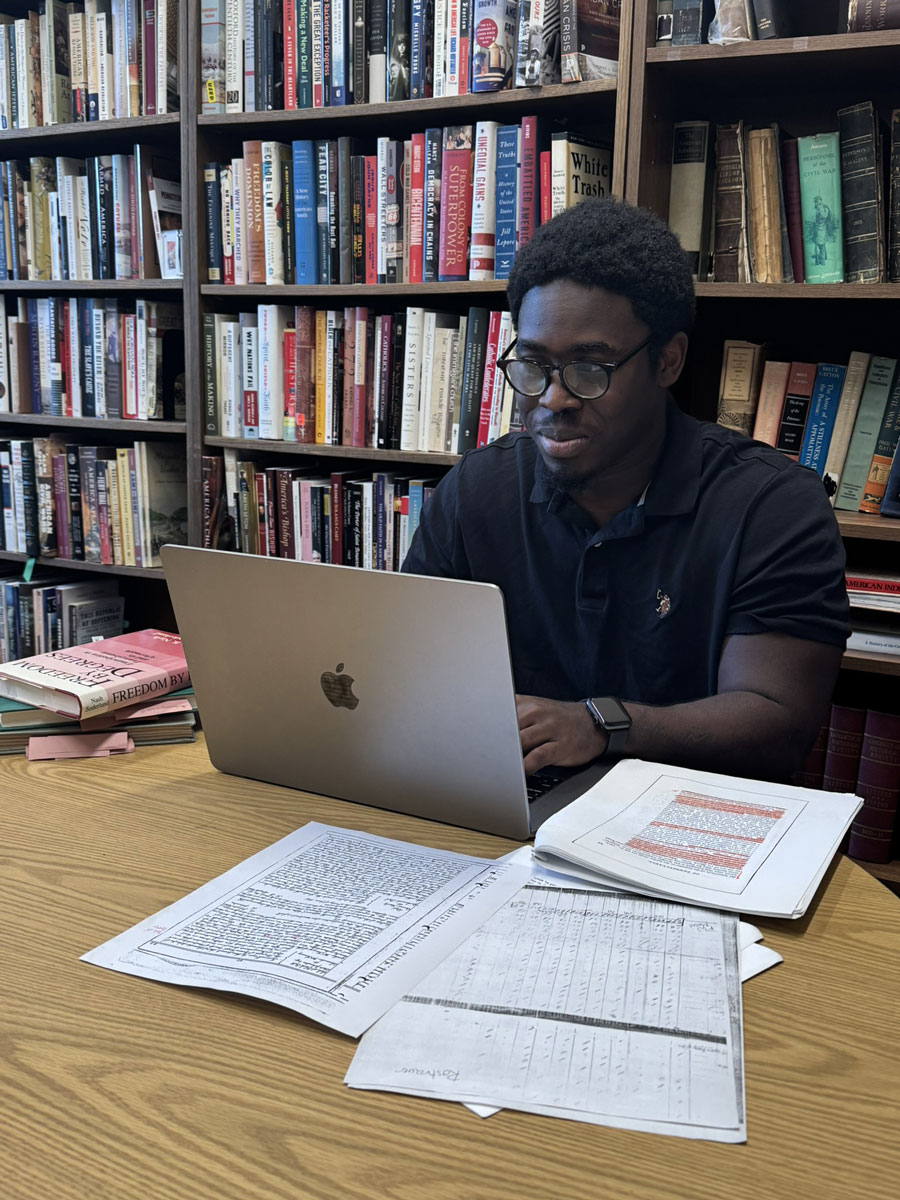
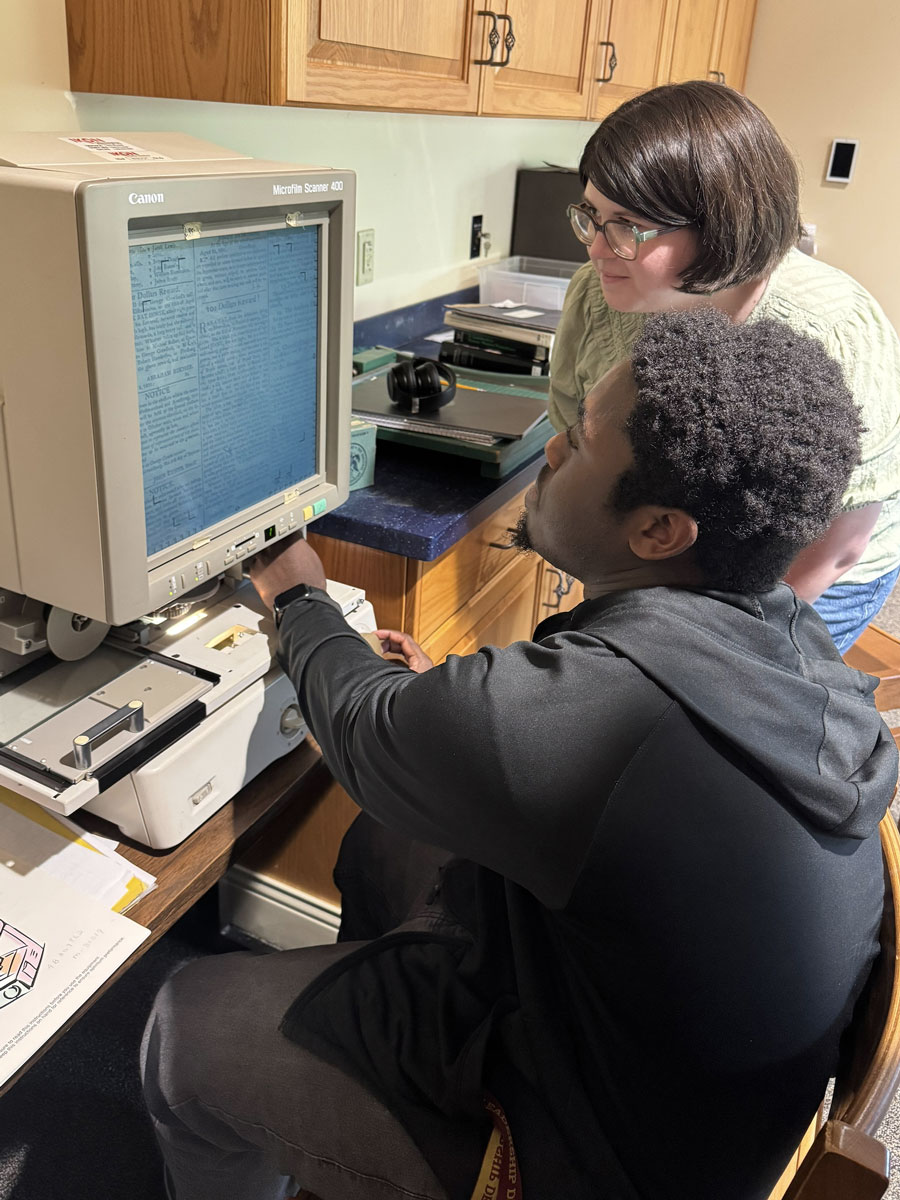
William Birdseye, a senior history education major from Greensburg, worked closely with McNelly on the educational materials. Corey Clay, a junior computer science major from Ellenton, Florida; Maura Jodkin, a senior environmental science major from Pittsburgh; and Jeffery Martin, a sophomore history education major from Mount Pleasant, worked with Arledge to conduct the municipality research.
Initial research sources included newspaper articles, court records and deeds, and the library and collections at the Westmoreland Historical Society were regularly utilized by researchers.
Team members and undergraduate workers were scheduled to begin creating lesson plans during the spring and summer months. Each plan is to encourage students to engage in critical inquiry, place-based learning and civic reflection.
Activities will help learners examine local primary sources, maps and historical records related to slavery in western Pennsylvania. Additionally, the lessons will emphasize essential disciplinary skills such as historical analysis, evaluating multiple perspectives and understanding the relationship between local and national histories.
“The Center for Northern Appalachian Studies works to preserve the region’s history and to make this history publicly available. While the notion of freedom during the American Revolution did not include everyone living within the American borders, our state’s gradual emancipation legislation attempted to expand the promises of freedom,” Arledge said. “We have a responsibility to include enslaved experiences in our county’s history, and our student researchers have worked hard to broaden the historical record. I am excited to see what could grow out of this project as we share it with the community.”
The second public-facing component is the Boundaries of Freedom Symposium, scheduled for Wednesday, Nov. 4, from 9 a.m. to 2:30 p.m. inside the Fred M. Rogers Center on the College campus.
Alonna J. Carter, associate curator of the Museum of African American History at the Senator John Heinz History Center and a lecturer in the History Department at the University of Pittsburgh, will be the keynote speaker. The symposium also features sessions that aim to bring together historians, educators, museum professionals and community partners to share research, practical resources and innovative approaches to teaching and preserving local history.
The event is free to attend thanks to the CIC grant. Registration is available online.
A grant proposal was submitted in November 2025. The funding must be utilized between Jan. 1 to Dec. 31, 2026.