LATROBE, PA – Saint Vincent College continues to be at the forefront of student-athlete safety thanks to an innovative and ongoing collaboration with Penn State University funded by the Chuck Noll Foundation for Brain Injury Research.
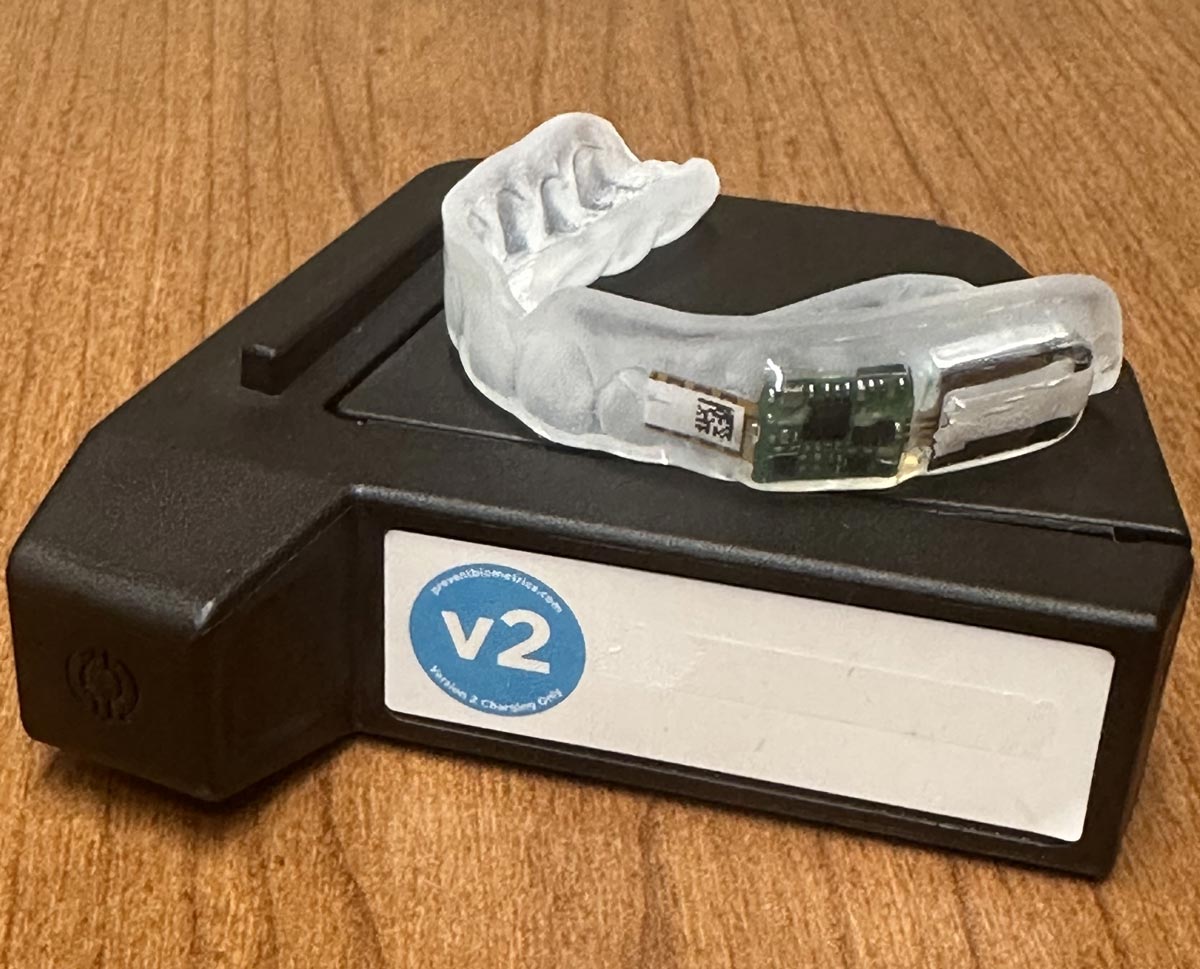
Using custom-fitted mouthguards embedded with microsensors, Dr. Andrew Palko, an assistant professor in the College’s Health Science program, and Dr. Reuben Kraft, a professor of mechanical engineering at Penn State, are working to collect real-time data on head impacts sustained by student-athletes during practices and games.
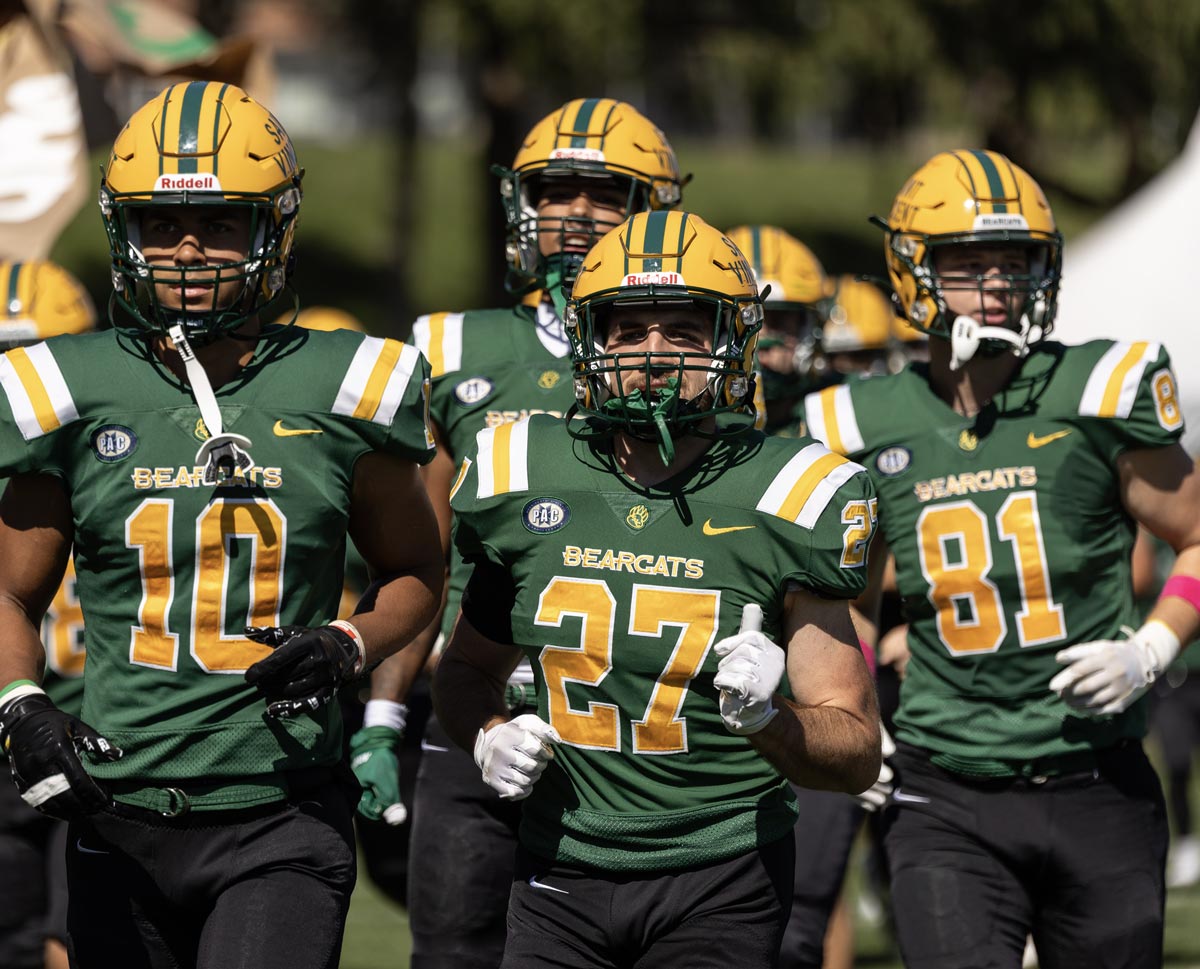
Kraft was at Saint Vincent College on Tuesday, Aug. 25, to conduct mouth scans on Bearcat football players for the custom-fit mouthguards and to assist Palko with preparing equipment for the 2026 football season. This is the second year for the study at Saint Vincent, Palko said. Last year, 10 players volunteered for the study; for the 2026 season, 22 Bearcats signed up.
The Prevent Biometrics instrumented mouthguards contain sensors that measure the movement of the head during an impact, including linear acceleration, angular acceleration and angular velocity. The system also records information such as the direction of an impact, impact count and estimated impact workload. A proximity sensor helps determine when the mouthguard is properly positioned on the athlete’s teeth, while Bluetooth communication allows recorded data to be synchronized with the research system.
“The data, paired with advanced computational modeling, allows us to estimate how these impacts affect the brain—even in the absence of a diagnosed concussion,” Palko said. “The larger goal is to determine whether those biomechanical measures are related to meaningful changes in function and whether they might eventually provide clinicians with additional information when evaluating brain health.”
During practices and games, data is transmitted from each mouthguard when significant head impact occurs. The data are synchronized and uploaded to a secure cloud-based platform where they can be incorporated into the Brain Simulation Research Platform, or BrainSim. Developed by Kraft and his collaborators, BrainSim uses the measured head-motion data in finite-element computer models to estimate the magnitude and distribution of strain within brain tissue.
“Following a significant head impact, the student-athlete completes follow-up cognitive testing, which can be compared with preseason baseline results,” Palko said. “We can then examine whether any observed functional changes correspond with the brain’s biomechanical response estimated by the simulation.”
The hope is that one day healthcare practitioners will be able to use data from mouthguard scans to aid in treating head injuries.
Kraft’s research team has already generated more than 100,000 computer simulations as part of the broader research program. Continued data collection across athletes, teams and sports will provide a much larger dataset for examining how impact characteristics, estimated brain strain and neurocognitive outcomes may be related.
In addition to Bearcat football players, members of the men’s and women’s lacrosse teams at the College also have participated in the mouthguard study. The Saint Vincent cohort is part of a broader multi-site effort examining head-impact exposure across different sports and competition levels.
The study holds extra meaning for Palko as the collaboration brings together his research interests and more than two decades of experience as a certified athletic trainer and educator. A former NCAA Division III football player at Waynesburg University, he experienced multiple diagnosed concussions during his playing career.
Palko’s professional experience has included work with NCAA Division I, II and III student-athletes, professional athletes, and patients in clinical practice. At Saint Vincent, his research focuses on sport-related concussion, repetitive head-impact exposure and the use of objective physiologic and biomechanical measures to better understand athlete brain health.