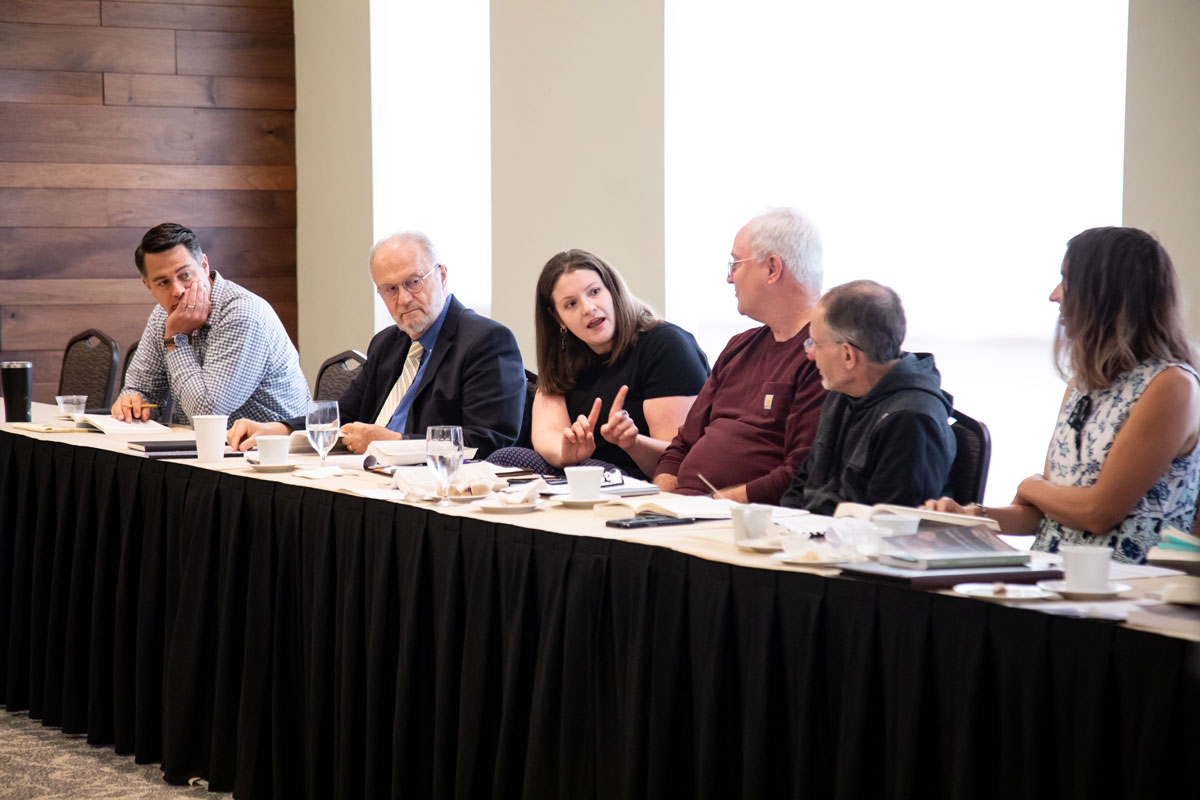
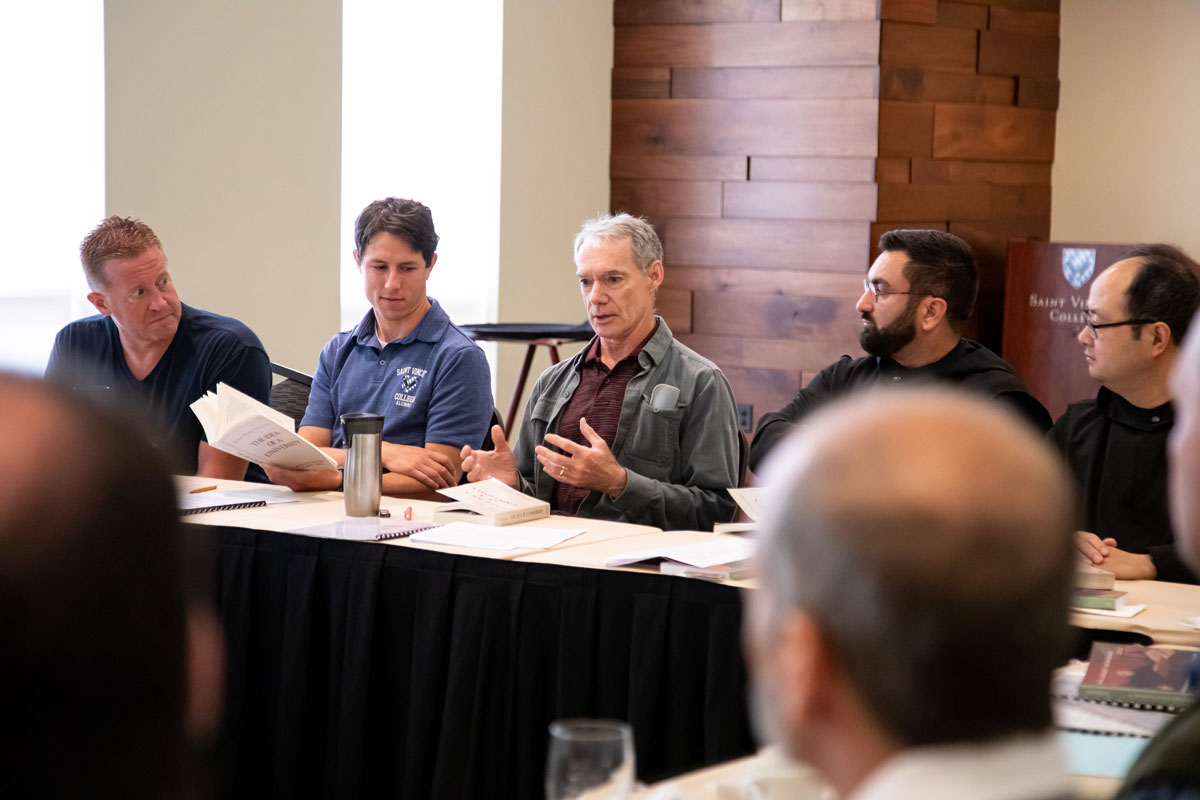
LATROBE, PA – A variety of Saint Vincent College and Seminary faculty gathered at the end of August for the annual Saint Vincent Center for Catholic Thought and Culture (CCTC) seminar to open the 2026-27 academic year.
On the mornings of Aug. 24, 25 and 26, approximately 30 faculty (laypeople and Benedictine monastic community members)—spanning disciplines as diverse as history, chemistry, business administration, nursing and criminology—gathered in the Fred M. Rogers Center on campus.
This year’s theme was “The Legacy of St. John Henry Newman: A Map for Catholic, Benedictine and Liberal Arts Education Today,” taking its cue from Pope Leo XIV’s writings on Catholic education and his declaration of Newman as co-patron saint of Catholic education.
Faculty read and discussed Newman’s “The Idea of a University,” a collection of essays and lectures; Newman’s essay, “The Mission of St. Benedict,” found in “Historical Sketches”; and various addresses and texts from Pope Leo XIV on education, including his 2025 apostolic letter on Catholic education titled “Drawing New Maps of Hope.”
The past two seminar themes have been “Popes John Paul II, Benedict XVI and Francis on Catholic Education” and “Who Is Pope Leo XIV?”
Dr. Lucas Briola, C’13, Endowed Chair in Catholic Thought and Culture and CCTC director, noted the previous two themes were complementary to this year’s seminar.
“Besides spending time in fellowship, faculty focused especially on how these texts might shape our common work at Saint Vincent in advancing our Catholic, Benedictine and liberal arts mission,” said Briola, who serves as associate professor and chair of the Theology Department housed in the College’s School of Arts, Humanities and Social Sciences. “For the faculty attending, this time together serves as something like a retreat—a time to engage in ideas, recall a larger vision for our work, and support each other through humility and grace.”
In addition to Briola, seminar sessions were led by Dr. Michael Krom, professor and Department of Philosophy chair, and Dr. Michael Robinson, an associate professor of engineering.