Alumni will go into successful careers in
- High school teaching
- Technical writing
- Master’s degree programs
- College or University Faculty
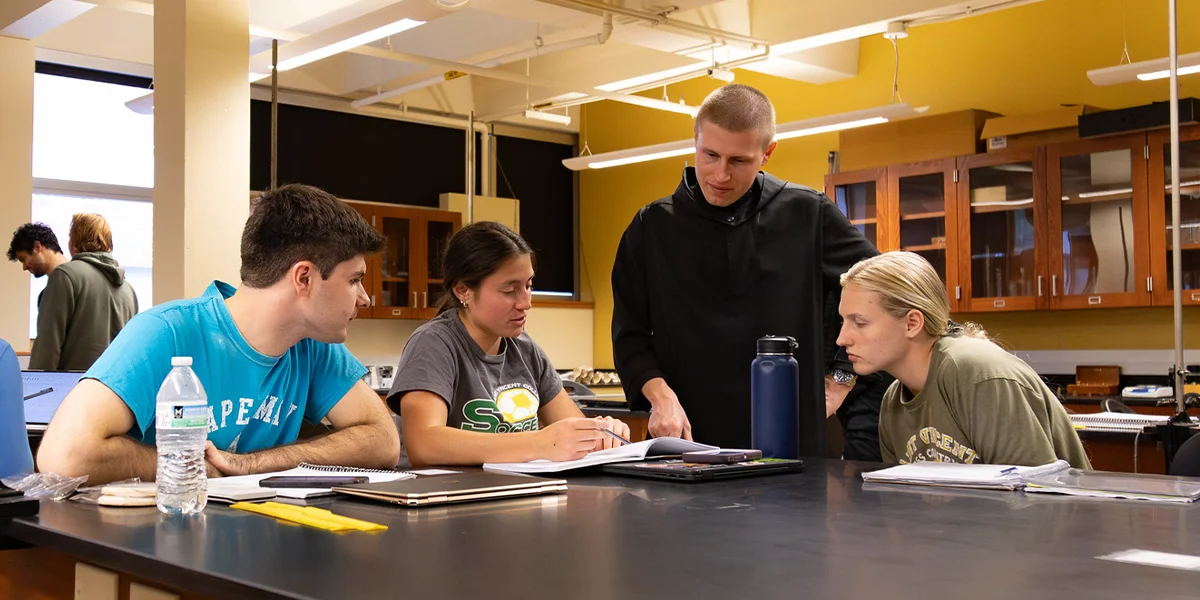
The physics education program stresses conceptual understanding of the fundamental theoretical fields of physics through discussion and demonstration and helps students develop their experimental skills through both laboratory experience and classroom experience and individual research projects. With small classes, individualized attention, and a tight-knit community of support, this program prepares students for certification to teach at the secondary school level through cooperation with the Education Department. Students interested in pursuing a secondary education certification can learn more here: Education Certification: Grades 7-12
In the physics education program at Saint Vincent, you can expect to:
Learn: Saint Vincent College offers a rigorous physics curriculum that rivals that at larger schools but is offered in the Benedictine tradition of excellence with the personal attention only possible at a small school.
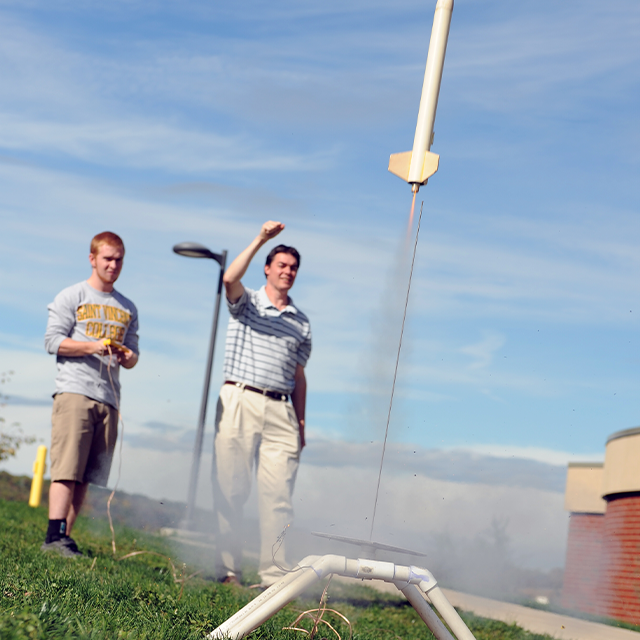
Do: Saint Vincent College has the resources, equipment, and faculty to help undergraduate students investigate the questions that interest them, so you are are not limited to projects related only to current faculty research. You will be enagaged in research from the start.
Succeed: Saint Vincent College physics education majors succeed after graduation, whether it is in secondary teaching or graduate school.
Saint Vincent’s physics teacher education program is ranked No. 1 in the state and No. 5 nationally by College Raptor.
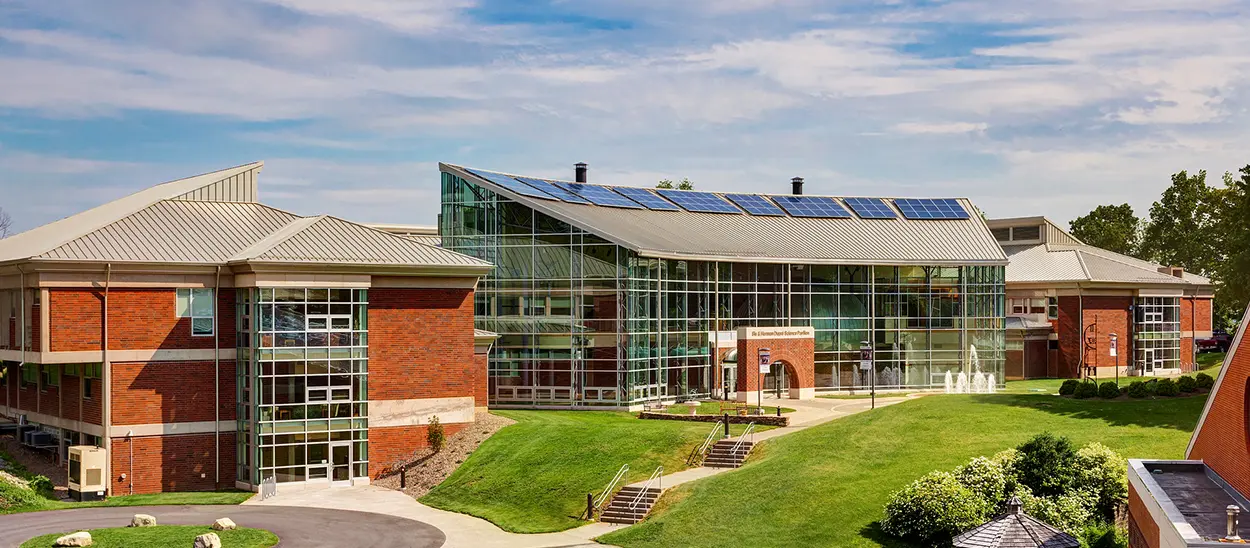
The physics program and laboratories are housed in the Sis Herman Dupré Science Pavilion. Examples of state-of-the-art equipment include an observatory with a Celestron Edge HD 14-inch telescope, a planetarium, an electronics fabrication laboratory with a CNC mill and 3D printers, and a research-grade optical interferometer, all of which are available for student use in the classroom and for individual research projects. Hands-on labs accompany many of the theory courses, and students have ample opportunties to conduct research including preparing and presenting a research capstone project their senior year.
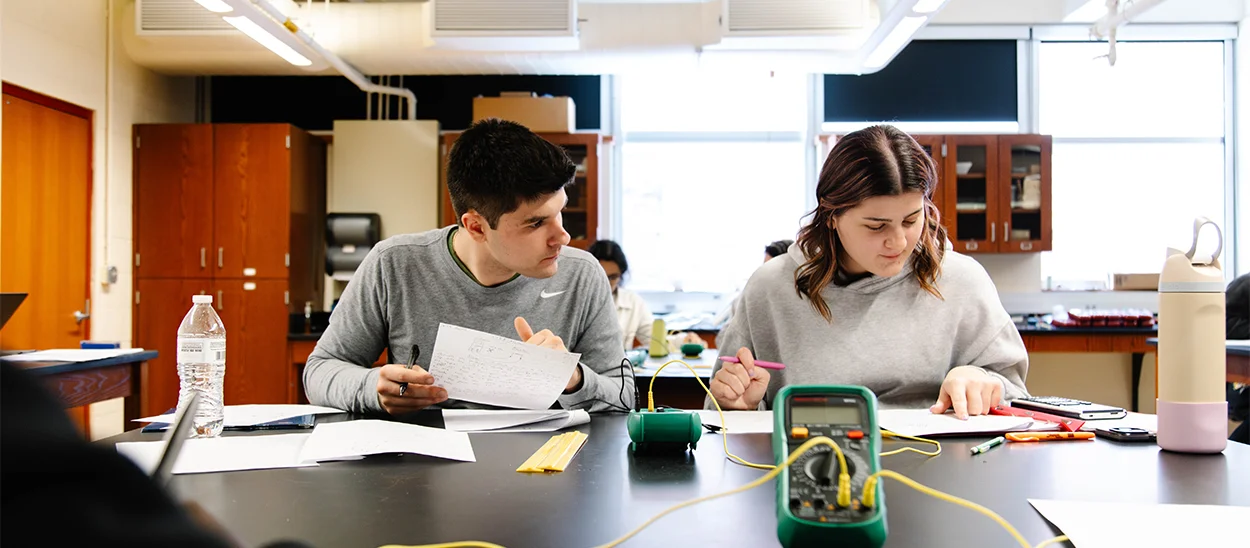
Starting freshman year, students engage in field experiences that build essential skills in diverse settings. Integrated with coursework, these experiences allow immediate application of educational theories. Opportunities include lesson planning for homeschooling students in our STEP-Up program, immersive co-teaching, and a 14-week student teaching internship. Learn more details about our educational field experiences.
The Saint Vincent Physics Club is nationally recognized as a "Notable Chapter" of the Society of Physics Students. The club hosts a section of Sigma Pi Sigma, the Physics Honor Society, which recognizes excellence in physics and astronomy, encourages student interest, promotes service, and fosters fellowship among top scholars. Sigma Pi Sigma membership is lifelong and includes a complimentary year in the Society of Physics Students.
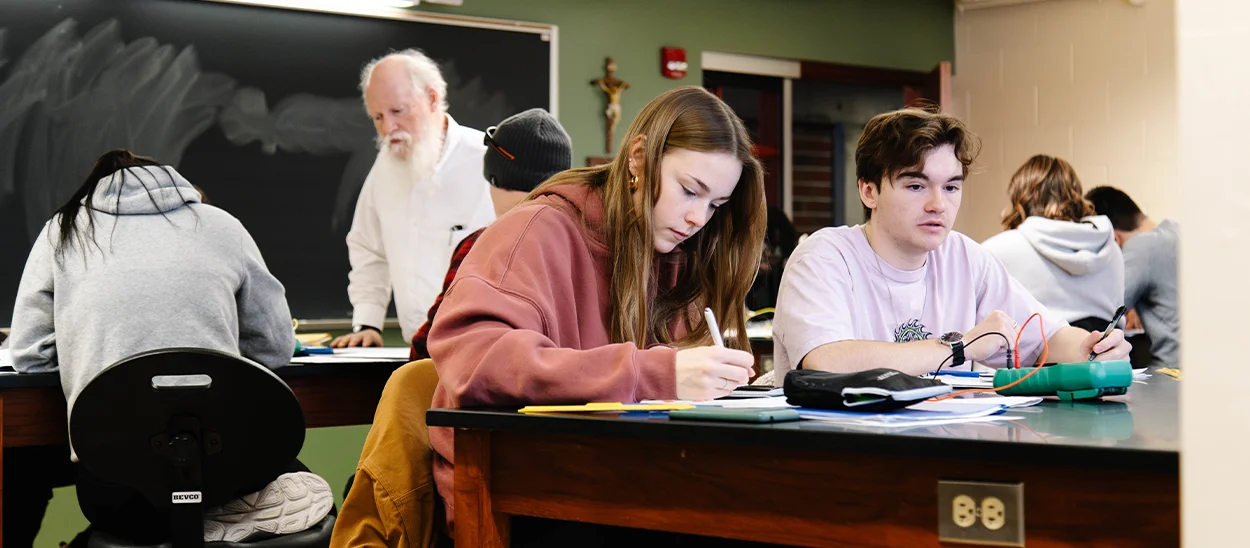
The Society of Catholic Scientists fosters fellowship among Catholic scientists and demonstrates the harmony of faith and reason which aligns with our Catholic, Benedictine curriculum. The Society hosts conferences, lectures, and provides educational resources.
There are numerous exciting, enjoyable, and lucrative career paths available for those with a bachelor's degree in physics education.
Alumni will go into successful careers in
Our students have secured jobs and internships at a variety of companies in their field and enrolled in prestigious graduate schools.
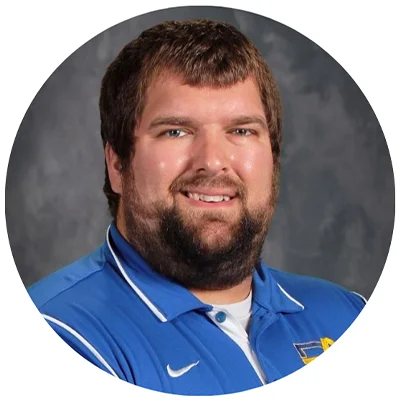
"The physics program at Saint Vincent College not only prepared me with the content knowledge to become an educator but also equipped me with the skills necessary to be a successful educational leader. The support I received from the faculty, staff, and even my peers was unmatched and made my transition from college life to the professional workplace seamless. I will always cherish my time as a member of the physics department at Saint Vincent College and wouldn’t be where I am today without it!"
High School Teacher, Derry Area High School
The physics education major is part of the Herbert W. Boyer School of Natural Sciences, Mathematics, and Computing and is supported by our core curriculum, where students delve into diverse academic subjects at both foundational and advanced levels to explore how different disciplines connect, fostering deeper self-understanding and proficiency in their chosen field of study.
Our physics education curriculum is rich in laboratory experiences and provides a broad-based perspective on the fundamental principles of physics while allowing for independent study of topics of interest to the individual student. We introduce principles and techniques of research for the discovery of new physical principles.
Major Requirements for a B.S. in Physics Education - 56 credits
See Education Department for education course requirements.
Our BS physics education program includes several upper-level courses often not available at other small, liberal arts colleges, including:
Optics: In this course, students will study the basic principles of physical optics using a laboratory that includes lenses, mirrors, and prisms, as well as reflection, refraction, polarization, interference, diffraction, and holography. Our optics course provides students with foundational theory as well as hands-on experience in the laboratory.
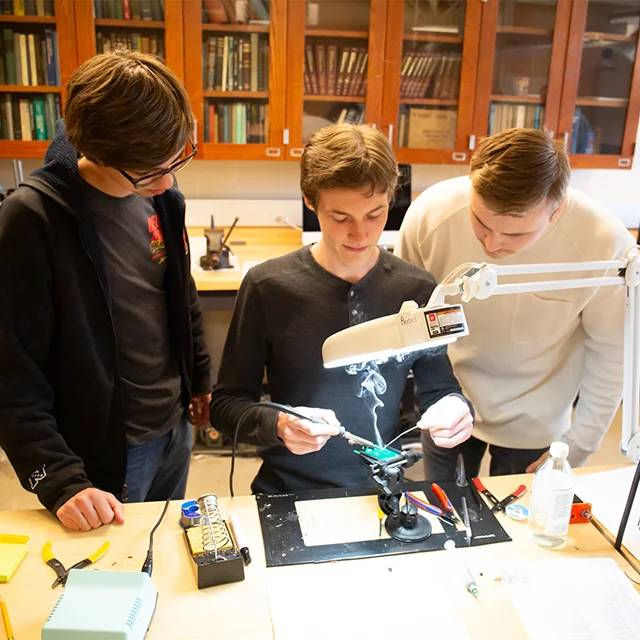
Electronics: This is a highly hands-on course that covers electronic principles from simple electricity to the development of digital electronics and the design and fabrication of printed circuit boards, some of the
most fundamental technologies upon which much of our modern society depends.
Field II Experience (STEP-Up Enrichment Program): This course offers education students a transformative experience in which they design and teach a ten-week course for home-schooled children. This hands-on practice enhances their skills in curriculum development, classroom management, and instructional strategies while building confidence, creativity, and adaptability.
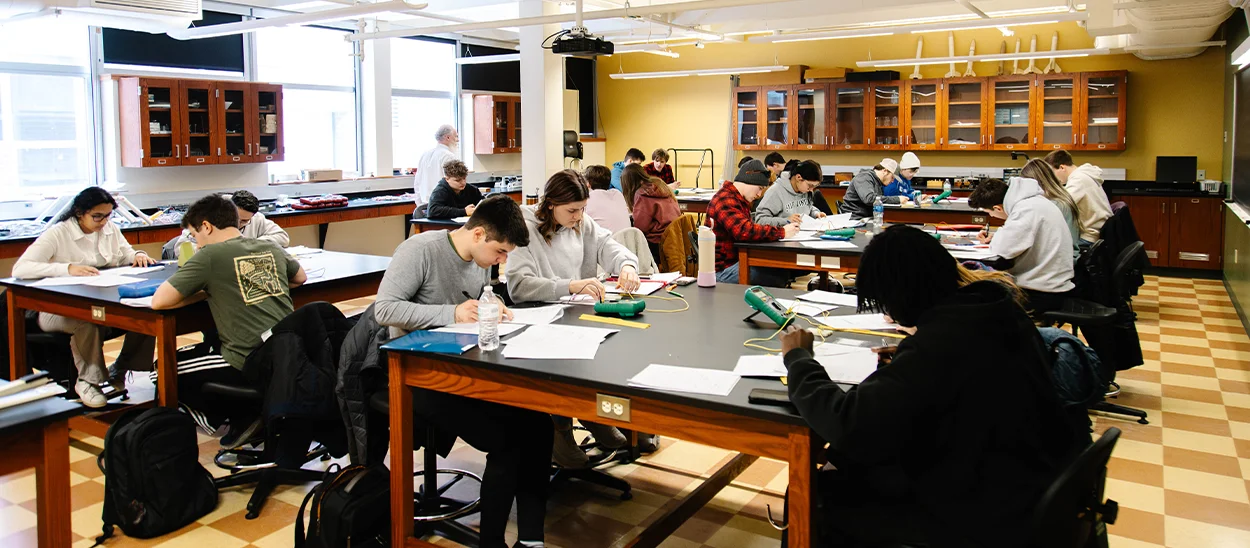
The Collaborative Learning Program, inspired by our Benedictine hallmark of community, is designed to enhance your learning experience by fostering interaction with knowledgeable upperclassmen and classmates. In this program, you'll exchange ideas in a relaxed setting with a tight-knit group, which helps deepen your understanding and insight into course content ideas in a relaxed setting, which helps deepen your understanding and insight into course content.
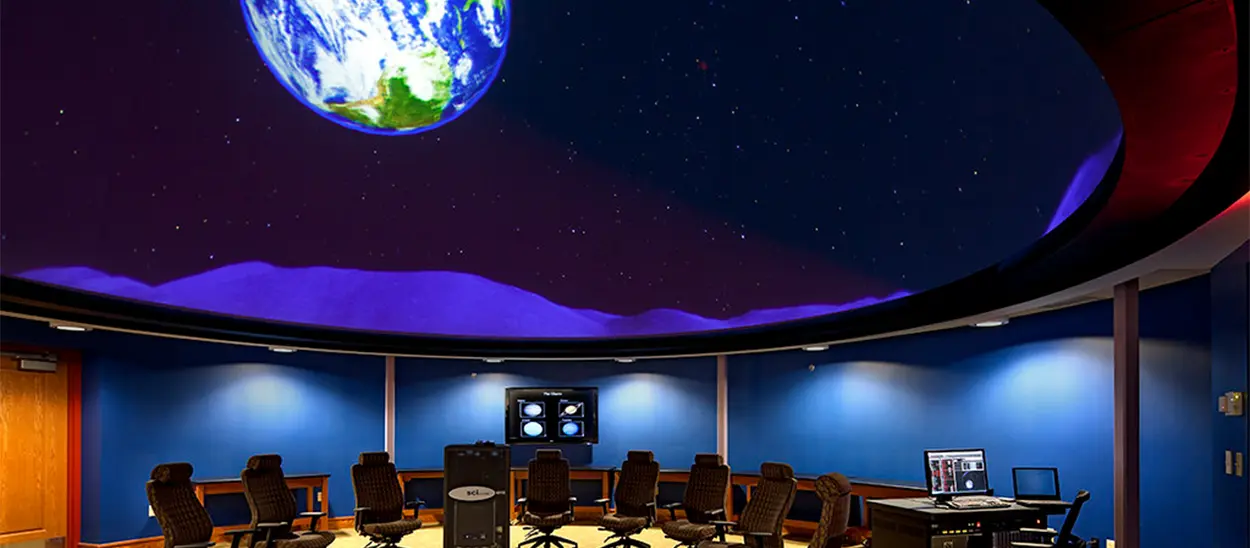
Education students develop lessons and present shows at the Angelo J. Taiani Planetarium and Astronaut Exhibit which provides a captivating journey through the cosmos, regularly offering shows that are developed and presented by current students.
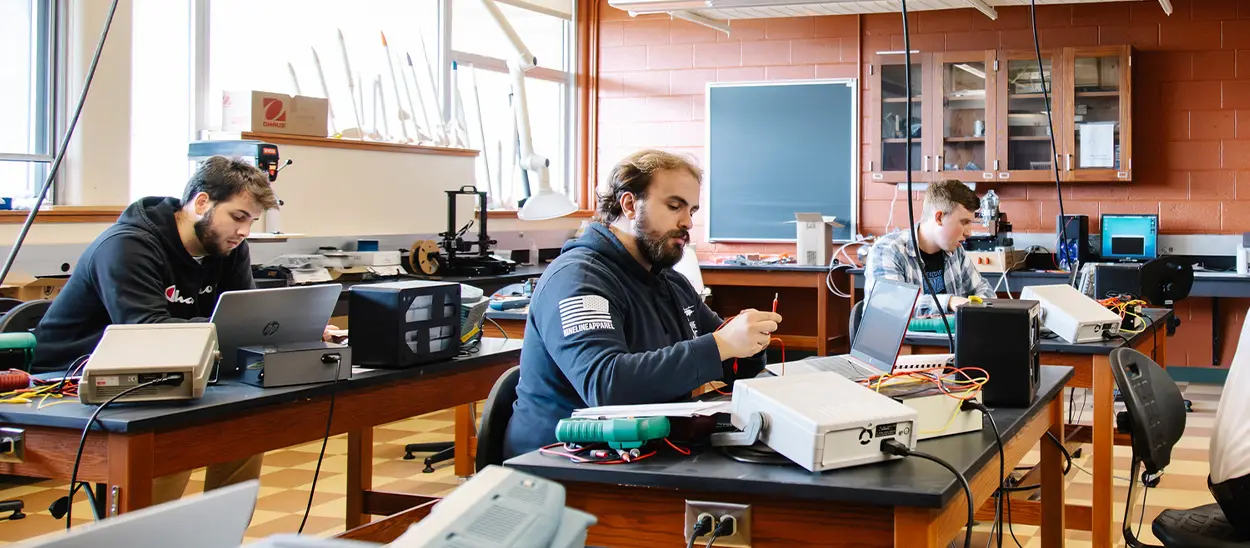
Laboratories include a Machine Shop, where students can fabricate equipment from metal and wood; an Electronics Laboratory, equipped with test and measurement tools, prototyping supplies, printed circuit board fabrication capabilities, and 3D printing resources; and a Student Research Laboratory, dedicated to providing space for students to conduct their own research projects.
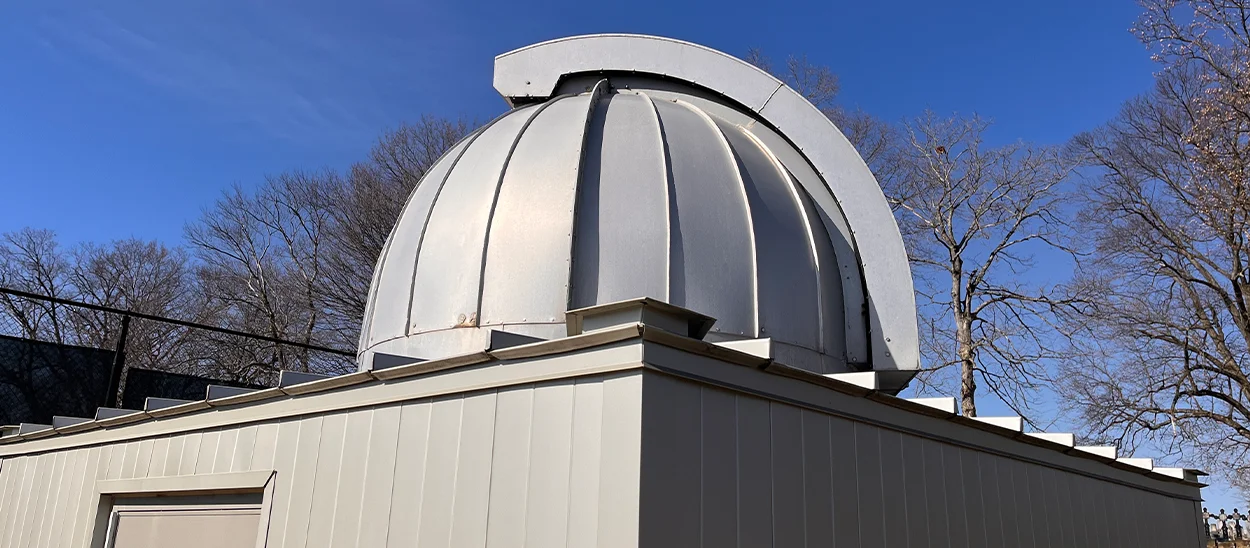
The Observatory is used for research and is equipped with a Celestron EdgeHD 14-inch telescope with computer control, imaging cameras and filter sets, and a spectroscope, all of which are utilized for observational astrophysics experiments.
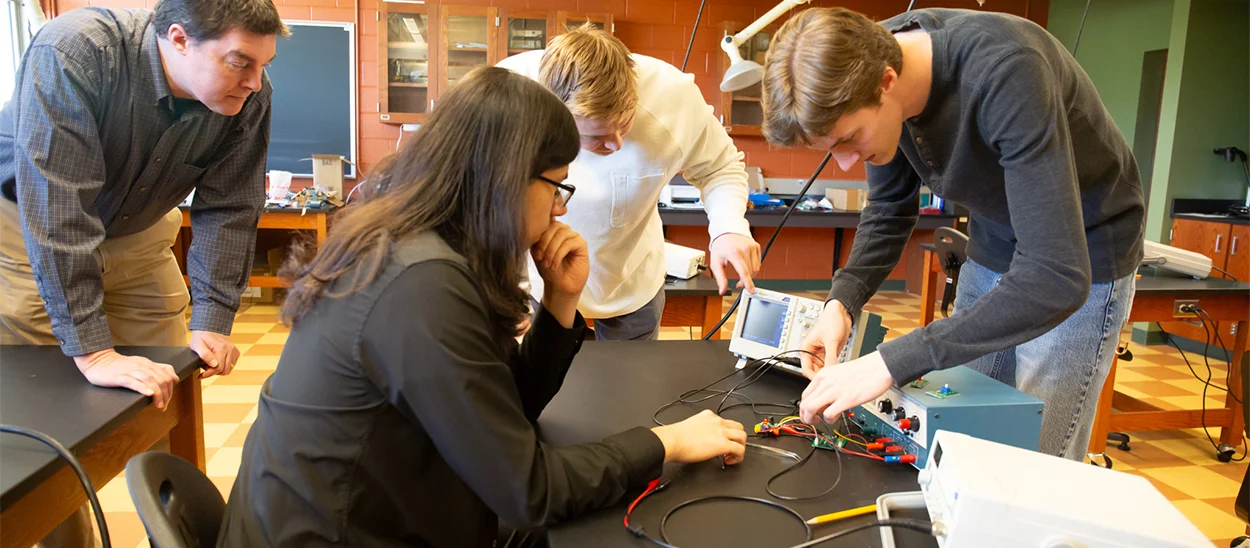
The student-built Cosmic Ray Detection Array supports several student research projects and provides cosmic ray shower data. The faculty/student-constructed Nuclear Magnetic Resonance (NMR) apparatus allows for detailed analysis of molecular structures, dynamics, and interactions by measuring the magnetic fields around atomic nuclei.