Health & Wellness
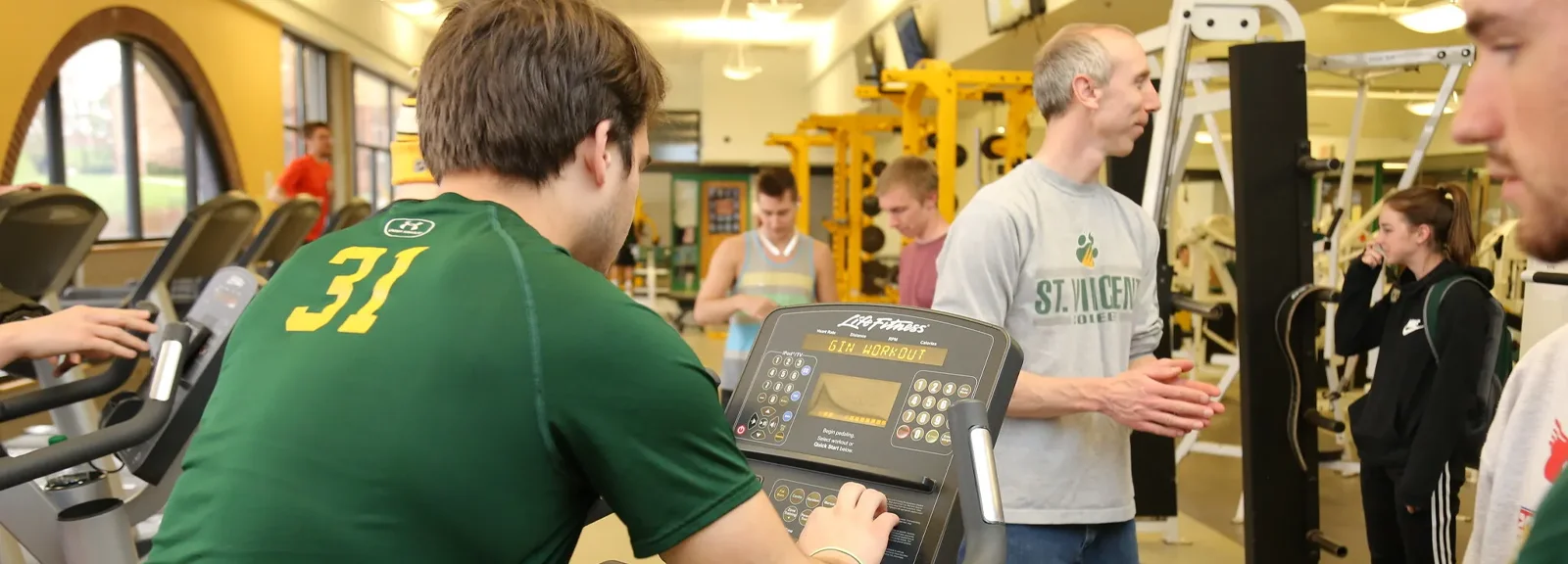
Saint Vincent College Wellness Center provides outpatient care and treatment for a wide variety of both physical and mental health issues at no cost to students in a professional and caring atmosphere without needing to leave campus. We do not collect or utilize health insurance in the Wellness Center. We also provide relevant health and wellness programming services including educational/informational workshops, Wellness Wednesday events, and regular visits from therapy dogs.
Hours and Location
We are open Monday through Friday, from 8:30 a.m. to 4:30 p.m., and are conveniently located on the 1st floor of the Robert S. Carey Student Center, Office 1500 next to the College Bookstore.
Appointments
We can be reached by stopping in, calling (724) 805-2115 (X2115), or emailing wellnesscenter@stvincent.edu.
We have a registered nurse (RN) available daily, and appointments may be scheduled with our certified registered nurse practitioner (CRNP) on Tuesday mornings from 9 a.m. to 11:30 a.m. or our medical doctor (MD) on Wednesday afternoons from 1 p.m. to 3:30 p.m.
Student Life
Health Services
-
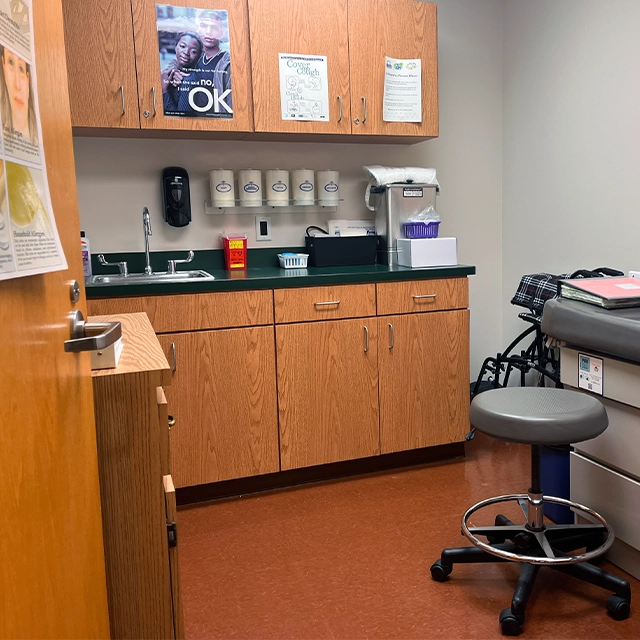
Students can receive care for illnesses or injuries, typically on the same day, from a member of our health care team. We can provide many over the counter (OTC) medications as well as some common prescription medications, also at no cost.
Some of our many health services include:
- Rapid testing for strep throat, influenzas A & B, and covid
- Blood sugar testing
- Urinalysis to assess for urinary tract infection (UTI)
- TB tests
- Physicals (athletic, driver’s license, employment, etc…)
- Flu shots every October
- Nutritional counseling
- Allergy shots with necessary information and serum provided from your home allergist
After-Hours Care
If a student needs care after hours or over the weekend, our residence hall staff members are available to assist students with medical or injury needs. In the event of an after-hours emergency, call either 911 or Public Safety at (724) 805-2911 (X2911) and the operator will contact the appropriate response personnel. Independence Health System Latrobe Hospital is minutes away from campus in case of emergency.
Emergency Equipment
Saint Vincent has the following equipment and supplies located across campus.
- AED units for use in cardiac arrest are located in most buildings on campus.
- Stop the Bleed bleeding-control kits are stored with every AED unit.
Counseling Services
Counseling services are provided in conjunction with UPMC Workpartners. We have licensed professional counselors (LPCs) that provide a supportive atmosphere for students to explore a wide range of issues with a caring professional staff member. Counseling offers an opportunity for self-exploration, personal growth, and assistance in the time of crisis with the perspective of an objective listener. The counseling process allows students to discover resources to assist with life challenges. Counseling sessions are covered by the student’s “health services fee” included in their tuition invoice and there are no additional charges or limits for the scheduled sessions.
Some common reasons that students seek counseling:
- Anxiety
- Stress management
- Conflict management
- Self-esteem issues
- Interpersonal relationship concerns
- Adjusting to college life
- Overcoming homesickness
- Eating disorders
-
Substance Abuse Prevention
How Drugs and Alcohol Can Affect Students:
Some students may be using drugs or alcohol to try and relieve some of the stress and pressure of college life. These students may not realize that drugs and alcohol will not actually relieve stress in the long run. Drugs and alcohol don’t solve problems, they tend to create problems or making coping with them more difficult. Drugs and alcohol can interfere with the student’s physical and mental ability. The student can be negatively affected by the use or overuse of drugs and alcohol. Substance use can have lasting effects on the brain and body. Judgment and physical abilities can be impaired, causing the student to struggle in academics, athletic performance, relationships, and responsible decision-making.
Be Safe, if you do choose to drink, be responsible
If you make the choice to drink, the best way to stay safe is to drink in moderation. The following tips are things you can do to stay safer if you decide to consume alcohol:
- Eat food before going out. Continue to snack throughout the night.
- Keep track of your drinks, know your limits, and stick to them!
- Sip your drinks, rather than chugging them.
- Pace yourself to one serving per hour.
- Alternate between alcoholic and non-alcoholic beverages.
- Keep hydrated; drink water throughout the night.
- Avoid drinking games and avoid shots; this can lead to dangerous levels of intoxication.
- Keep an eye on your drink - do not leave it unattended.
- Give yourself time. The only thing that will sober you up is time, not a cold shower or coffee
Know the facts about Alcohol Poisoning
Alcohol poisoning is serious, and it can be fatal. To make sure you are being safe, it is important to recognize the signs of an alcohol emergency:
- Vomiting or vomiting while passed out
- Slow, shallow, or irregular breathing
- Unresponsiveness or difficulty communicating
- Violent or threatening behaviors
- Cold, clammy, or blue skin
- Loss of bodily control
- Difficulty standing or walking
*The above signs of an emergency are not a checklist. If your friend experiences any of these symptoms after drinking alcohol, it is important that you call for help! 724-805-2911 or 911
Call for help! You will not get in trouble
Students should never hesitate to seek help for their peers’ personal welfare in drug, alcohol or other emergencies. Pennsylvania's law gives an underage person a defense to prosecution for the summary offense of consumption or possession of alcohol or drugs if: The person calls 911 or alerts campus safety, police or emergency services in the good faith belief that another individual needs immediate medical help to prevent death or serious injury.
Recognizing Alcohol/Drug Problems:
Assessing a potential substance abuse problem can be difficult. Some possible signs include drastic change in behavior or appearance, frequent accidents and minor injuries, reports from other students, change in interest or energy level during practice, missing practice or workouts, or deteriorating performance.
There is help available at the Wellness Center:
Confidential counseling is available on campus. The Wellness Center does not disclose information about students unless the student has given written authorization. The only exception is in situations involving risk of imminent harm to the student or specifically identified others. The Wellness Center will discuss confidentiality with each student in more depth. The appointment is an opportunity for them to discuss their use of drugs or alcohol and get recommendations for making healthy changes in a non-confrontational setting.
Please contact the Wellness Center if you have questions or would like to consult with a counselor at 724-805-2115
There are many services available for counseling, treatment, or rehabilitation for students. Students concerned about their own or another person's alcohol or other drug use are encouraged to contact the College's Wellness Center in Carey Center for confidential advice and referral.
Local Drug and alcohol treatment is available through:
- Gateway Outpatient Treatment 724-853-7300
- Strive Health of Greensburg 412-513-9891
- Alcoholics Anonymous (AA) 724-836-1404
- Greater Pittsburgh Al-Anon 412-821-7750
- SPHS Behavioral Health 724-532-1700
- Additional information about local resources.
Further information on treatment programs and support groups is available from the Wellness Center at 724-805-2115 and the Prevention Projects Program. Conscientious efforts to seek help for a drug or alcohol abuse problem will not jeopardize any student's record.
All incoming students are required to submit their immunization information by August 15 each year. The following link is also part of each admitted student’s Enrollment Portfolio.
2026 - 2027 Student Immunization Submission Link
Required immunizations are as follows:
- MMR (Measles, Mumps, Rubella) series of two doses.The first dose must have been given on or after the student’s first birthday with the second dose being at least four weeks later.
- Meningococcal A (also known as MCV-4, Menveo, Menactra, or MenQuadfi). The first dose is typically given between the ages of 11-12, with a booster dose on or after the student’s sixteenth birthday. If only one dose has been received, it must be on or after the student’s sixteenth birthday.
For the safety of our campus community, students who do not supply proper evidence of immunity or waive their right to immunize using the Student Immunization Submission Link may be removed from campus during a communicable disease outbreak in accordance with Pennsylvania state code.
Immunizations for International Students
In addition to the above immunizations required for all freshmen, a tuberculosis (TB) skin test or blood test is required for foreign-born students at high risk for TB.
An interferon-gamma release assay (IGRA) blood test (also called a QuantiFERON Gold Plus or T-SPOT test) is preferred over a tuberculin skin test for students not born in the United States. Students considered to be at high risk for tuberculosis (TB) include those who were born, traveled, or resided in a country with an elevated TB rate for at least a month – this list changes annually but currently includes any country other than the United States, Canada, Australia, New Zealand, or a country in western or northern Europe.
Bacille Calmette-Guérin (BCG) is a vaccine for tuberculosis (TB) used in many countries where the disease is endemic. This vaccine is generally not used in the United States and can cause a false-positive TB skin test reaction. Because there is no reliable way to distinguish a positive TB skin test reaction from a reaction caused by the BCG vaccine, the interferon-gamma release assay (IGRA) blood test is the preferred method of testing. Testing needs to be done within 6 months prior to arriving on campus with results submitted via the Student Immunization Submission Link.
Emergency Contacts
Saint Vincent College Public Safety (724) 805-2911 (X2911)
Blackburn Center (Sexual or Domestic Violence Services)
Westmoreland County Crisis Hotline
Crisis Text Line (text 741741)
Young People of Color Crisis Text Line (text STEVE to 741741)
Trans Lifeline (Transgender Peer Support)
Confidentiality Policy
Health services and counseling records are NOT part of a student’s academic record. No one other than the staff of the Wellness Center has access to them. Students must sign a written consent in order for any information to be shared outside our office.
The Wellness Center observes the principles of confidentiality as dictated by the ethical standards of the medical and counseling professions, and by the statutes of the State of Pennsylvania. The primary responsibility of the Wellness Center is to the client. Thus, our policy is that no information, verbal or written, will be released without specific permission of the student, EXCEPT when the student is considered to be in danger of harming him/herself, harming another, or is unable to care for him/herself. In all other cases when confidential information is disclosed to persons outside our services, the client must agree to the disclosure and sign a Release of Information consent form.
Our Staff